If you rent, live in a dorm, or cook in an apartment with one sliver of counter space, you don’t need a packed kitchen. You need a short, smart setup that handles most meals without turning drawers into junk piles.
A small kitchen works like a carry-on bag. Every item has to earn its spot. The goal isn’t to own less for the sake of it, it’s to cook with less stress, less clutter, and less wasted money.
Start with the few cooking tools that handle most meals
The best small kitchen tools are the ones you reach for every day. Think eggs in the morning, pasta at night, chopped vegetables for lunch, and leftovers the next day. That’s the real test.
A chef’s knife, cutting board, and skillet cover most everyday cooking
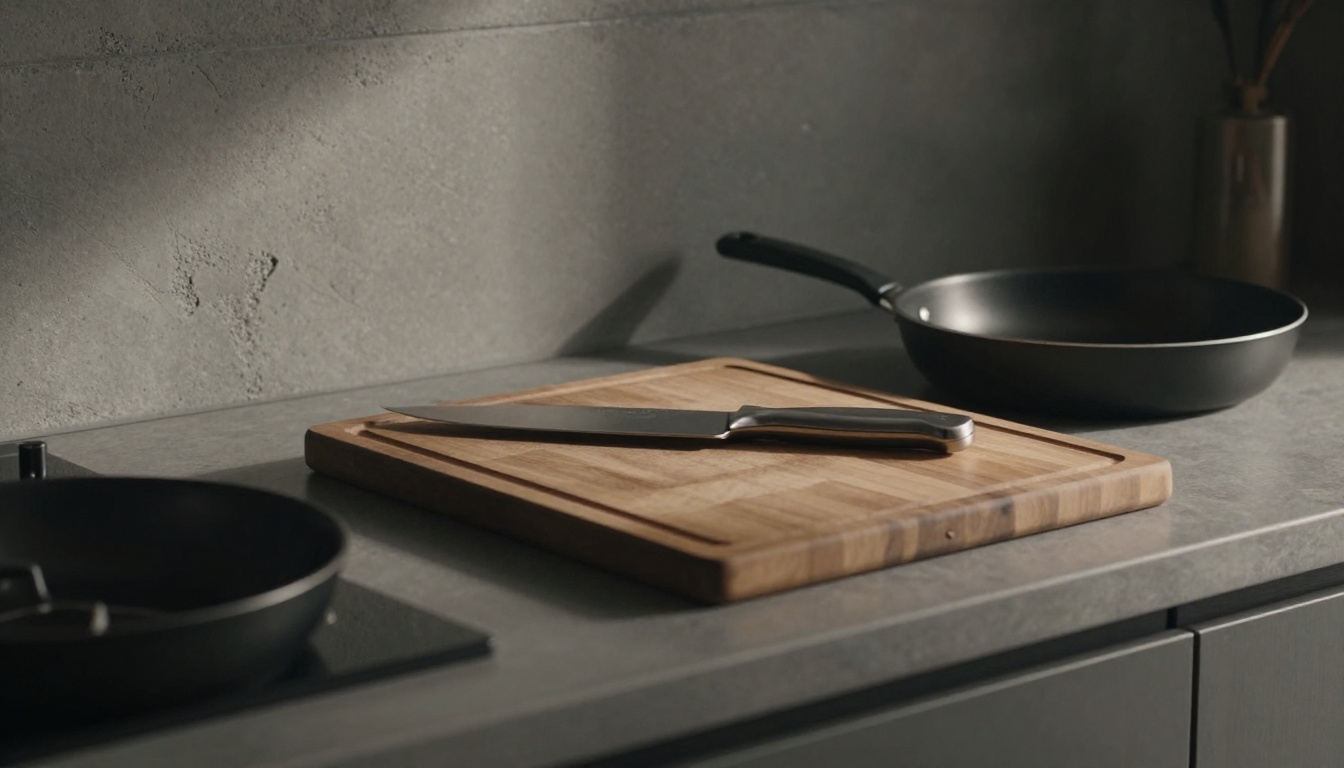
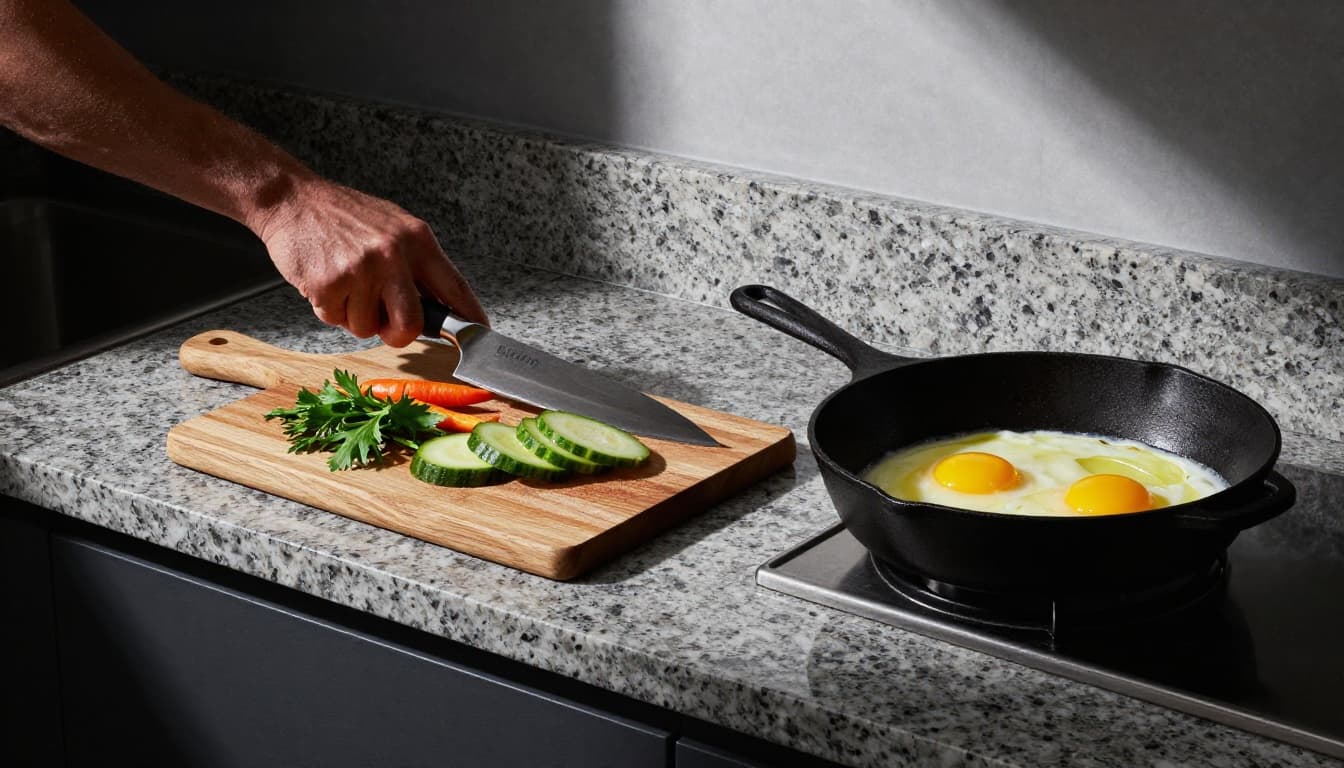
Start with three workhorses: a sharp chef’s knife, a solid cutting board, and a 10 to 12-inch skillet. That trio handles most basic cooking better than a drawer full of gadgets.
A chef’s knife covers slicing, dicing, mincing, and rough chopping. You don’t need a huge knife block. One good knife does almost everything. Add a cutting board, and you’ve also created prep space on a tiny counter.
Then comes the skillet. It cooks eggs, sears chicken, sautés greens, reheats leftovers, and pulls off easy one-pan dinners. If you cook often, this pan becomes your daily driver.
If a tool can’t help with several meals a week, it probably doesn’t deserve cabinet space.
That simple approach lines up with America’s Test Kitchen’s advice for tiny kitchens, which also favors a few dependable basics over specialty gear.
One saucepan and one stockpot or Dutch oven give you the rest of the basics
After that, add one 2 to 3-quart saucepan. It’s enough for rice, oatmeal, pasta, soup, sauces, and beans from a can. For most solo cooks or couples, that’s all the “small pot” you need.
A stockpot or small Dutch oven finishes the core setup. Choose a 3 to 5-quart size if storage is tight. It can boil pasta, simmer soup, cook stew, and handle batch meals for the week. A Dutch oven often wins because it can go from stovetop to oven and replace a few single-use pots.
Choose prep tools and utensils that earn their drawer space
Once your pots and pans are covered, the next layer is support gear. This is where clutter sneaks in. A small kitchen doesn’t need ten clever tools. It needs a few that make prep faster and cleanup easier.
The small hand tools worth keeping close
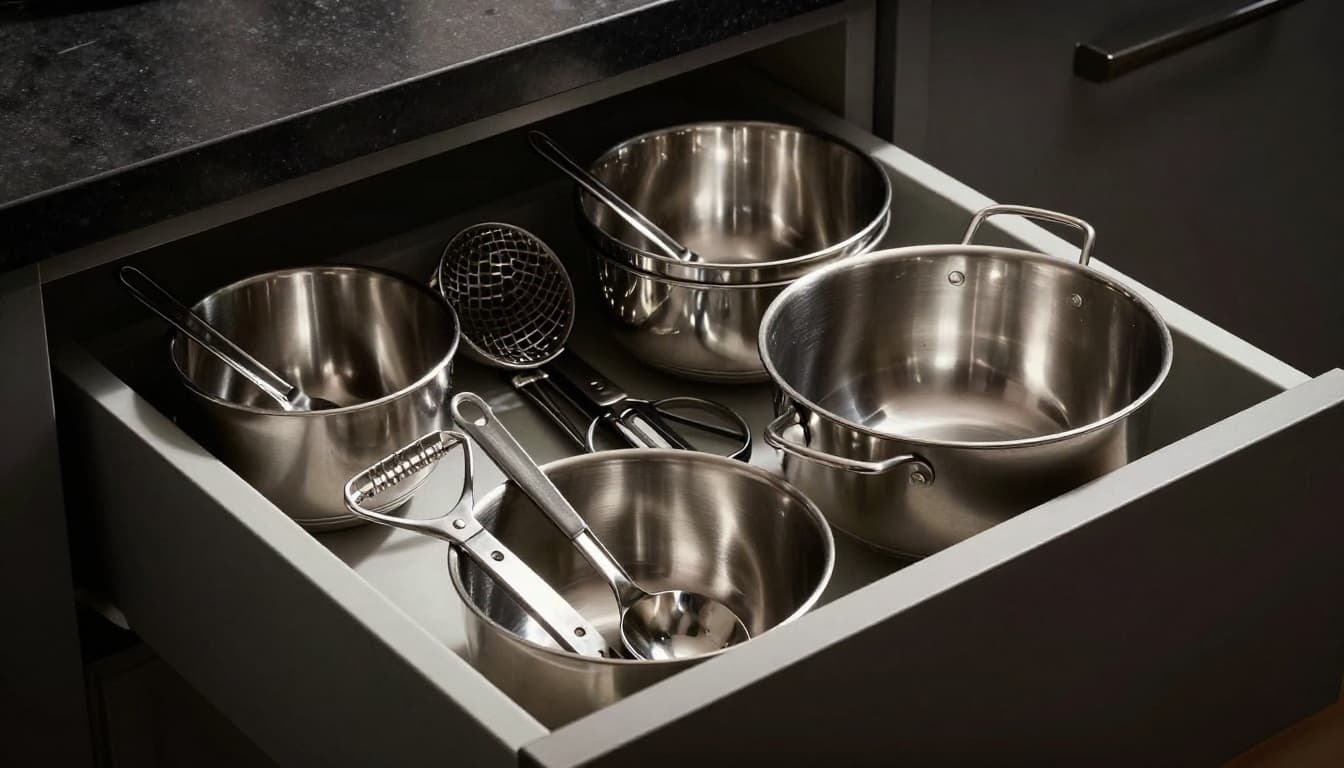
A mixing bowl helps more than people think. It holds chopped ingredients, mixes pancake batter, tosses salad, and stores marinating food. If you can, pick a stackable or nesting bowl.
Measuring cups and spoons matter if you bake, but they also help with rice, dressings, and portioning. A can opener is a basic must. So is a peeler if you cook potatoes, carrots, apples, or squash often. Kitchen shears are underrated too. They cut herbs, trim meat, open packaging, and even slice pizza in a pinch.
A colander is useful for pasta, rinsing beans, and washing produce, but only buy one if you have room. In tight kitchens, a smaller collapsible version makes more sense than a full-size bowl.
Also, don’t buy doubles unless you cook with other people every day. One peeler is enough. One set of measuring spoons is enough. Small kitchens punish extras fast.
The only utensils most home cooks really need
Most cooks can get by with a spatula, tongs, and a wooden spoon or spoonula. That’s it for daily cooking. A ladle helps if you make soup often, but many people can skip it.
Silicone tools make sense in 2026 because they’re easy on nonstick pans, simple to wash, and often slimmer to store. That fits with small kitchen trends for 2026, which lean toward compact, multi-use pieces instead of bulky sets.
Smart small-kitchen upgrades that save space instead of wasting it
Once the basics are in place, a few add-ons can make cooking easier. The trick is picking upgrades that improve results, not ones that sit in the back of a cabinet.
When a sheet pan, digital scale, or thermometer makes cooking easier
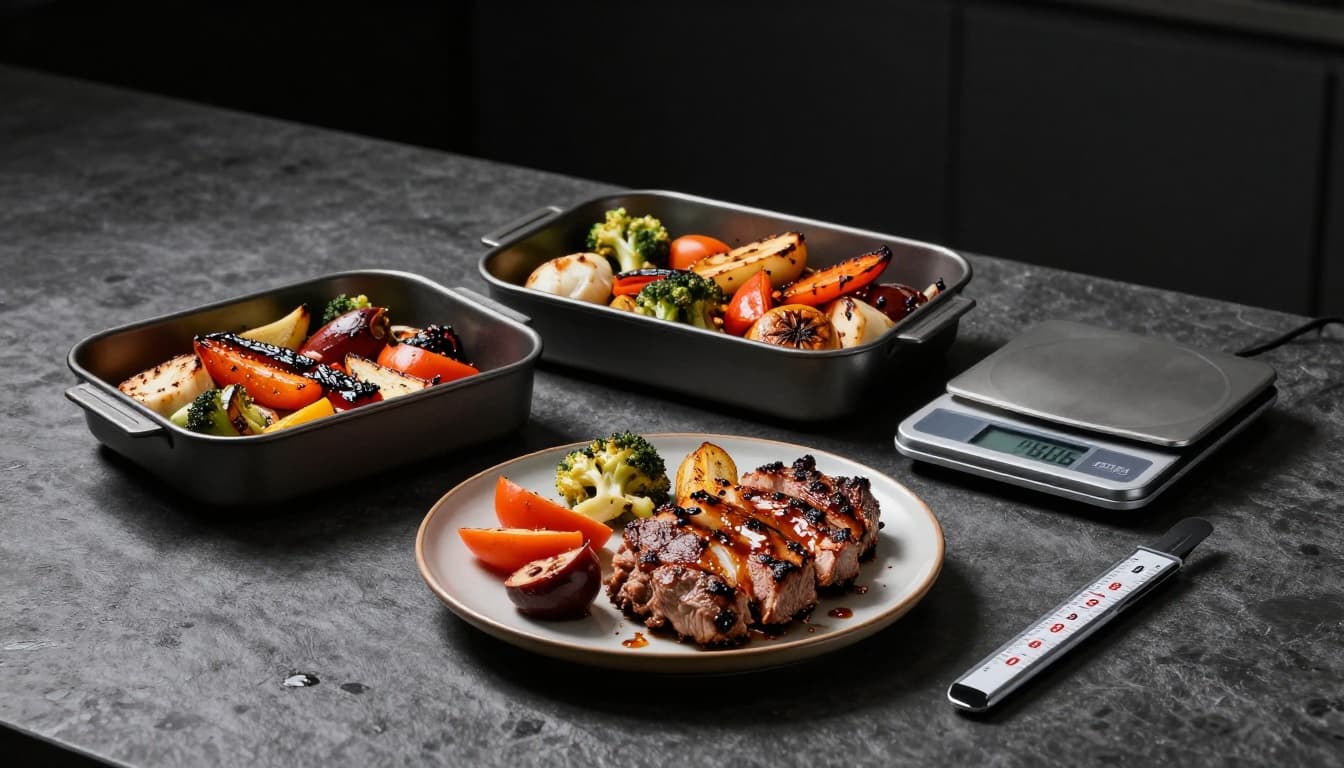
A half-sheet pan is one of the best upgrades for a small kitchen. It roasts vegetables, bakes cookies, reheats leftovers, and handles sheet-pan dinners. It also fits better in smaller ovens than oversized bakeware.
A slim digital scale helps with baking, meal prep, and reducing dishwashing. Instead of using several measuring cups, you can weigh ingredients in one bowl. An instant-read thermometer is another smart buy, because it stops you from overcooking chicken or serving underdone meat.
Which small appliances are worth it in a tiny kitchen
If you want one appliance, make it one that replaces several others. Right now, compact multi-cookers are popular in US small kitchens because they can pressure cook, slow cook, steam, and reheat in one footprint. Current 2026 small-space trends also favor combo cooking, like compact induction and air-fry functions, over owning separate machines.
Still, only buy an appliance if you’ll use it every week and know where it will live. That’s the rule. Consumer Reports’ space-saving appliance picks are a good reminder that countertop gear needs to be both compact and useful.
How to avoid clutter and buy tools that actually fit your space
A good tool can still be wrong for your kitchen if it stores badly. In a shared apartment or a narrow galley kitchen, size and shape matter as much as quality.
Pick multi-use pieces, nesting sets, and stackable storage
Look for nesting cookware, stackable bowls, and tools that fold flat or stand upright. Magnetic knife storage can free up a drawer. So can slimmer silicone utensils. If a handle is awkward or a pot can’t stack, it takes up more room than it earns.
Skip these common tools if you rarely cook that way
Skip unitaskers, oversized knife sets, extra frying pans, bulky stand mixers, and trendy appliances you saw on social media. If you don’t bake bread every week, you probably don’t need the machine built for it. Match your kitchen to your habits, not to someone else’s dream setup.
A small kitchen doesn’t need more stuff. It needs better choices.
Start with the knife, board, skillet, saucepan, and one larger pot. Then add only what you use often and can store easily.
The best setup is the one that lets you cook tonight’s dinner without fighting your space. What tool do you reach for most, and which one has been wasting room this whole time?