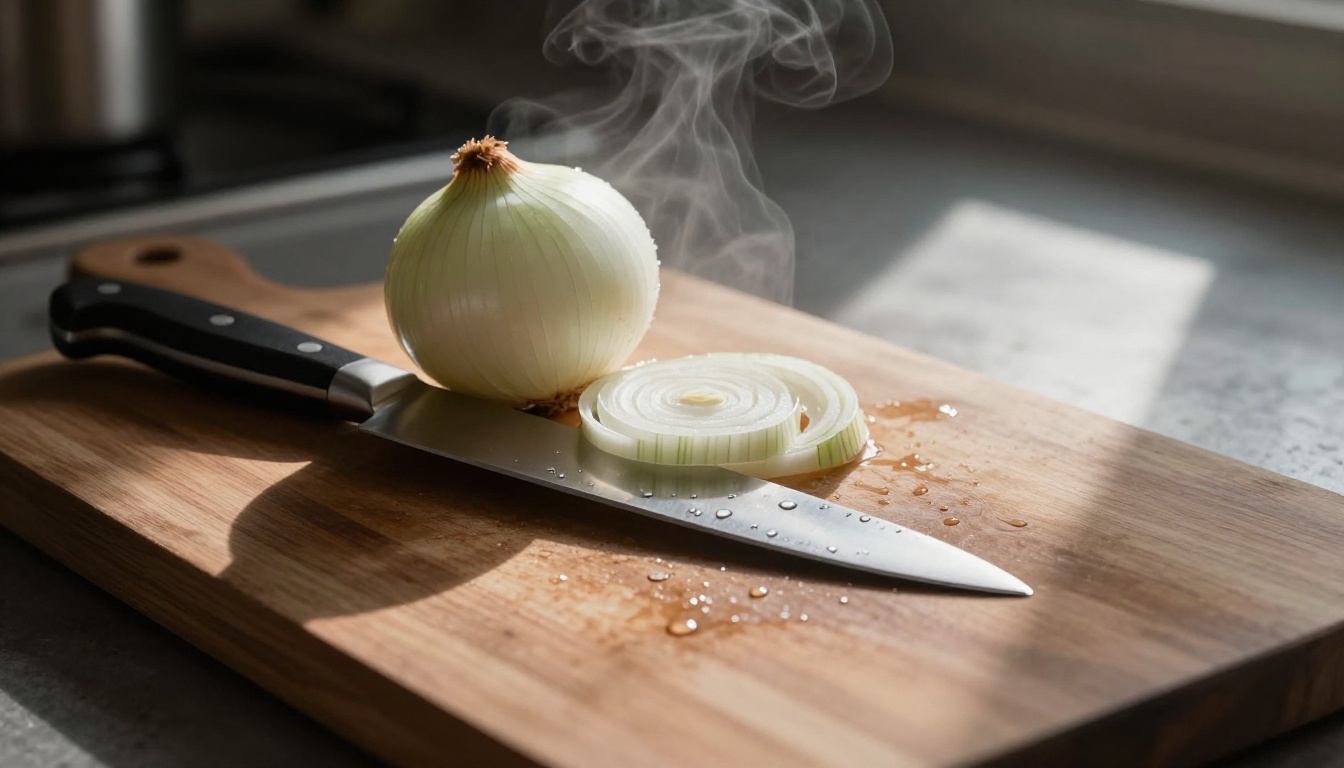
You only wanted to make dinner, not look like you just watched a sad movie. Yet one onion hits the board, and your eyes start burning.
That sting comes from syn-propanethial-S-oxide, a gas onions release after you cut into their cells. You probably won’t stop tears 100 percent, but you can cut onions without crying too much if you change your knife, your pace, your setup, and a couple of old habits.
Here’s why those small changes work.
Start with the science, so the fixes make sense
An onion is built like a stack of tiny pressurized packets. When you slice through it, you break those packets open. That lets sulfur compounds and enzymes mix, and the mix creates the irritant that floats toward your eyes.
Once that gas reaches the moisture on your eyes, your body treats it like trouble. So your tear glands go to work and try to wash it out. That’s why the sting comes first, then the tears.
Recent reporting on the chemistry behind onion tears explains the same chain reaction in plain English, from broken cells to airborne irritants to watery eyes. If you want the chemistry version, Bristol’s propanethial S-oxide explainer is a solid quick read.
The big point is simple: less cell damage means less spray and less gas. That’s why clean cuts, slower slicing, and better airflow matter more than most folk remedies.
Why the root, the juice, and the air around your board matter
Not every part of the onion behaves the same way. The root end is often linked with stronger irritation, because it tends to hold more of the compounds that feed the tear-causing gas. So when you leave the root attached at first, you keep some of that material locked in a little longer.
Juice matters too. A crushed onion leaks more liquid than a neatly sliced one, and that extra liquid becomes extra mist in the air. In lab imaging, tiny onion droplets can shoot out much faster than most people expect.
Then there’s airflow. The gas and droplets don’t move on magic, they ride the air around your cutting board. If your kitchen air carries them toward your face, your eyes pay for it.
The goal isn’t zero tears. It’s less spray, less gas, and less of both reaching your eyes.
The best ways to cut onions without crying too much
The strongest fixes are also the least flashy. You don’t need a kitchen gadget or a weird ritual. You need cleaner cuts and a setup that keeps the irritant away from your face.
Use a very sharp knife, not a dull one
A sharp knife slices. A dull knife crushes.
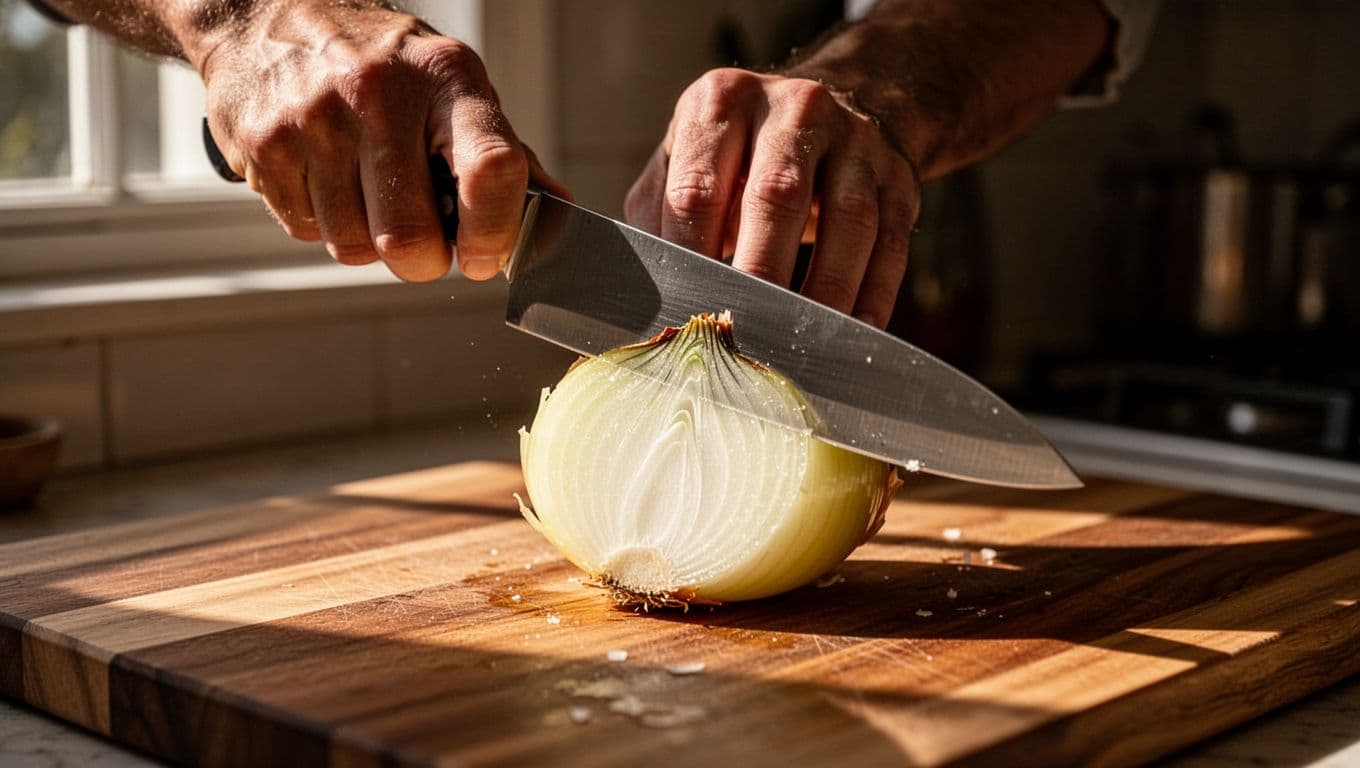
That difference matters because crushed onion cells release more juice and more irritant. Clean cuts break fewer cells along the way, so there’s less airborne mess. For most home cooks, a sharp chef’s knife or santoku is the easiest tool for the job.
Keep the blade honed, and don’t saw back and forth hard. Let the edge do the work. If the onion slips or smears under the blade, your knife probably needs attention.
Kitchen tests line up with the science here. Guides like Epicurious’ tested onion-cutting advice also put a sharp blade near the top for good reason.
Slice slowly and steadily instead of rushing
Speed feels smart, but it often makes things worse.
Fast chopping can fling more droplets into the air, especially if your cuts get choppy or rough. Slow, steady slices keep the onion more controlled, and they also make you safer with the knife. That’s a good trade.
Think of it like opening a shaken soda. If you jerk it around, you get spray. If you move with control, you get less mess.
A calm rhythm usually beats a fast one. Slice, reset, slice again.
Keep the root end on until the last cuts
This is one of the easiest habits to adopt. Trim the stem end first, peel the onion, then leave the root attached while you make your main cuts.
That won’t make the onion harmless, but it can reduce how much irritating material gets released early. It also helps hold the layers together, which makes neat slicing easier.
When you’re almost done, cut away the root and toss it. Small habit, solid payoff.
Use airflow or a simple barrier to protect your eyes
If onions bother you a lot, move the air or block the gas.
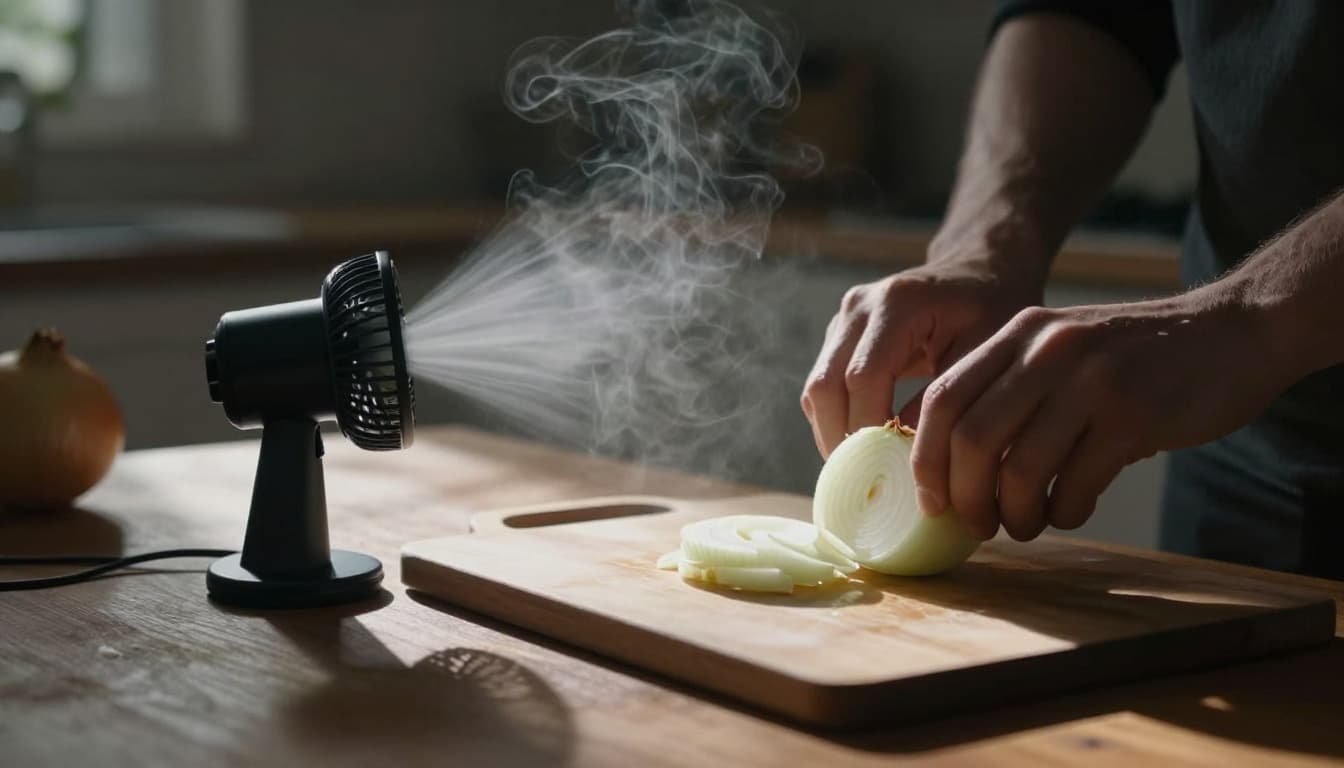
A small fan aimed across the cutting board can push the fumes away from your face before they drift upward. Point it so the air travels sideways, away from your eyes and toward open kitchen space. You don’t need a wind tunnel. A light, steady stream is enough.
If you cut onions often and still end up miserable, tight-fitting goggles work. They may look a little funny, but so does crying over taco night. Practical beats stylish here.
When cooks compare tricks side by side, airflow and eye protection usually beat old myths. The Kitchn’s side-by-side trick test makes that pretty clear.
Set up your kitchen to make onion prep easier
The best time to reduce onion tears is before the first cut. A small setup change can save you from a lot of blinking later.
Cut near running water, or place the onion in water when it makes sense
Water can help because it catches some of the irritating compounds before they reach your eyes. That’s why some people like to cut near a lightly running tap, or rinse the cut onion briefly as they work.
You can also slice or soak onion pieces in water for dishes where texture isn’t a big deal, like salads, sandwiches, or quick pickles. In those cases, the water can mellow both the sting and the sharp bite.
Still, this trick isn’t perfect for every recipe. If you need the onion dry for browning, roasting, or crisp edges, soaking can get in the way. Wet onion steams more than it sears.
So use water as a situational tool, not your only plan.
Do not chill the onion if you want fewer tears
This is the onion tip people repeat most, and it’s not as dependable as it sounds.
Chilling seems logical because cold can slow chemical activity. But newer imaging of onion spray has raised doubts about that advice. Cold onions may produce faster, more forceful droplets when cut, which can work against you.
So if your goal is fewer tears, don’t count on the fridge trick. A sharp knife, slow cuts, and better airflow are more reliable than a cold onion. For a plain-language overview of the tear-causing chemistry, Chemistry World’s onion tear breakdown adds useful context.
Common onion cutting myths that do not help much
A lot of onion advice survives because it’s easy to remember, not because it works well. Separating weak tricks from strong ones makes your prep faster and less annoying.
Why cutting faster is not the answer
People often say, “Just get it over with.” That sounds tough, but it’s poor kitchen advice.
Rushing usually means rougher cuts, more crushed cells, and more spray. You also lose control of the knife. So you get extra tears and extra risk at the same time.
Slow slicing feels less dramatic, yet it works better. That’s the pattern with onions. Calm beats speed.
Why mouth breathing is not a reliable fix
Breathing through your mouth doesn’t stop the gas from floating around your face. Your eyes still sit in the same cloud of irritant, and that’s the main problem.
Some people swear by this trick because it gives them something to focus on. But there’s no strong reason to expect it to block the onion gas from reaching your eyes. Practical methods, like cleaner cuts and better airflow, hold up much better. You can see similar advice echoed in Forks Over Knives’ onion-cutting guide.
The good news is that you don’t need a magic trick. You need a better routine.
Most onion tears come from the same few causes, crushed cells, airborne spray, and fumes drifting straight to your eyes. So the fix is simple too: use a sharp knife, cut slowly, leave the root for last, skip the chilling trick, and add a fan or goggles if onions hit you hard.
Try those changes the next time you cook. A few small moves can cut the sting fast, and dinner won’t have to start with tears.