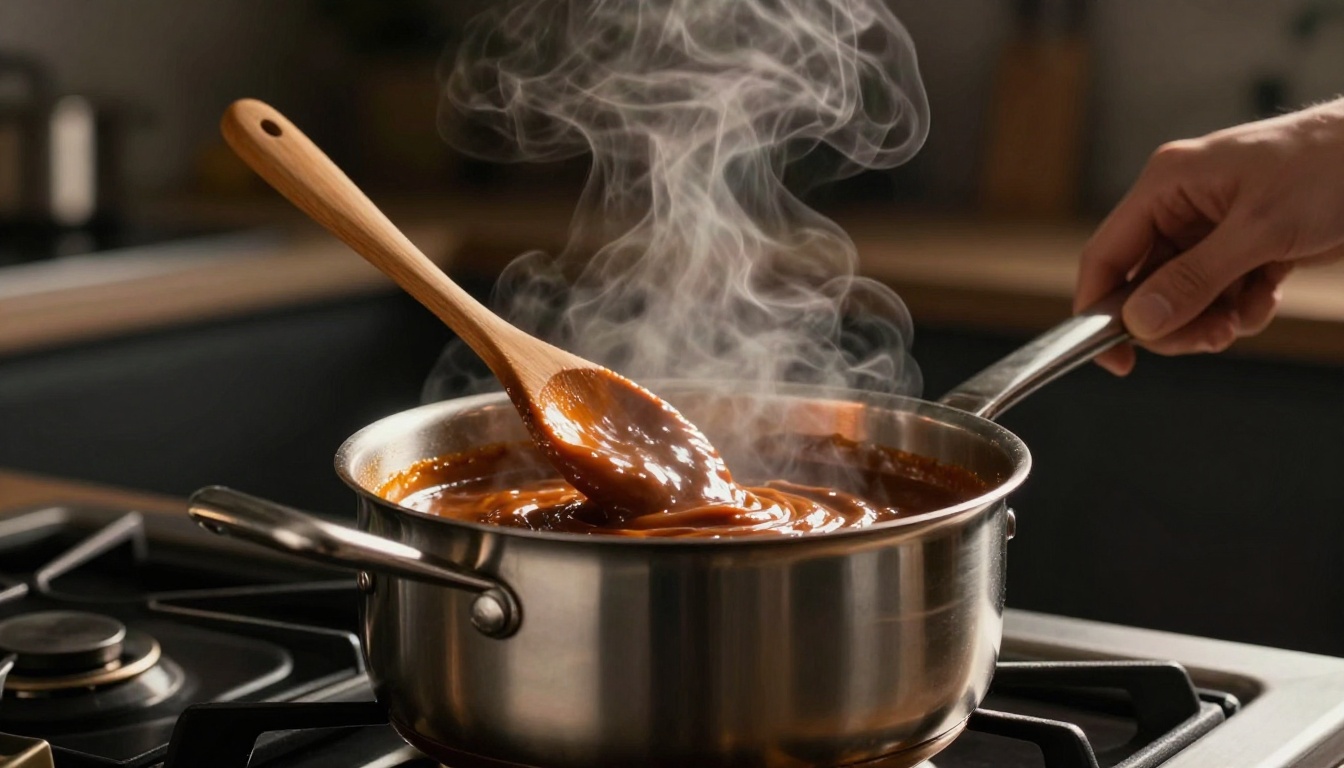
You know the moment. Dinner is ready, you reach for the spoon, and the sauce looks wrong. It’s either stiff like paste or so loose it runs across the plate.
The good news is that most sauce texture problems are easy to fix in minutes. You usually don’t need to start over, toss the pan, or panic. Small moves work best, and the right move depends on why the sauce changed in the first place.
Let’s sort out the cause first, then fix a thick sauce, a thin sauce, and the common mistakes that lead to both.
First, figure out why the sauce feels off
Before you add anything, pause and look at the pan. A sauce can seem perfect one minute and off the next because sauces keep changing as they cook, sit, and cool.
Heat is often the main reason. If a sauce simmers too long, water cooks off and the texture tightens. On the other hand, if it hasn’t simmered long enough, extra liquid stays behind and the sauce looks weak.
Serving temperature matters too. Many sauces thicken as they cool, especially gravy, cheese sauce, and cream sauce. So if you test a sauce right off the burner, then let it sit for five minutes, it may feel much thicker at the table.
Why sauce gets too thick
A sauce usually gets too thick for one of four reasons. First, it over-reduced, which means too much liquid evaporated. This happens fast in a wide pan or over high heat.
Second, you may have added too much thickener. Flour, cornstarch, and arrowroot don’t need much. A little extra can turn gravy or stir-fry sauce heavy in a hurry.
Third, some sauces pack in solids that naturally tighten the texture. Cheese, tomato paste, pureed vegetables, and nut-based mixtures all add body. If you add them early, the sauce can stiffen as it cooks.
Finally, sauces thicken when they sit over heat. Even after the flavor is right, the pan keeps working. That’s why a finished Alfredo can turn gluey while you plate dinner. For another home-cook take on this problem, see this guide to fixing a thick sauce.
Why sauce stays too thin
Thin sauce has its own set of causes. Often, it simply needs more time. A low, uncovered simmer lets water escape and concentrates flavor at the same time.
Extra liquid is another common issue. A splash too much stock, cream, wine, or pasta water can throw off the balance. This is easy to do when you’re cooking quickly and tasting as you go.
Sometimes the thickener is too weak. A slurry made with too little cornstarch, or added to a sauce that never reaches a simmer, won’t do much.
Also, some sauces don’t need starch, they need richness. A thin pan sauce may need butter. A skimpy cream sauce may need a little cream or cheese so it feels full and silky, not watery.
How to thin a sauce that turned out too thick
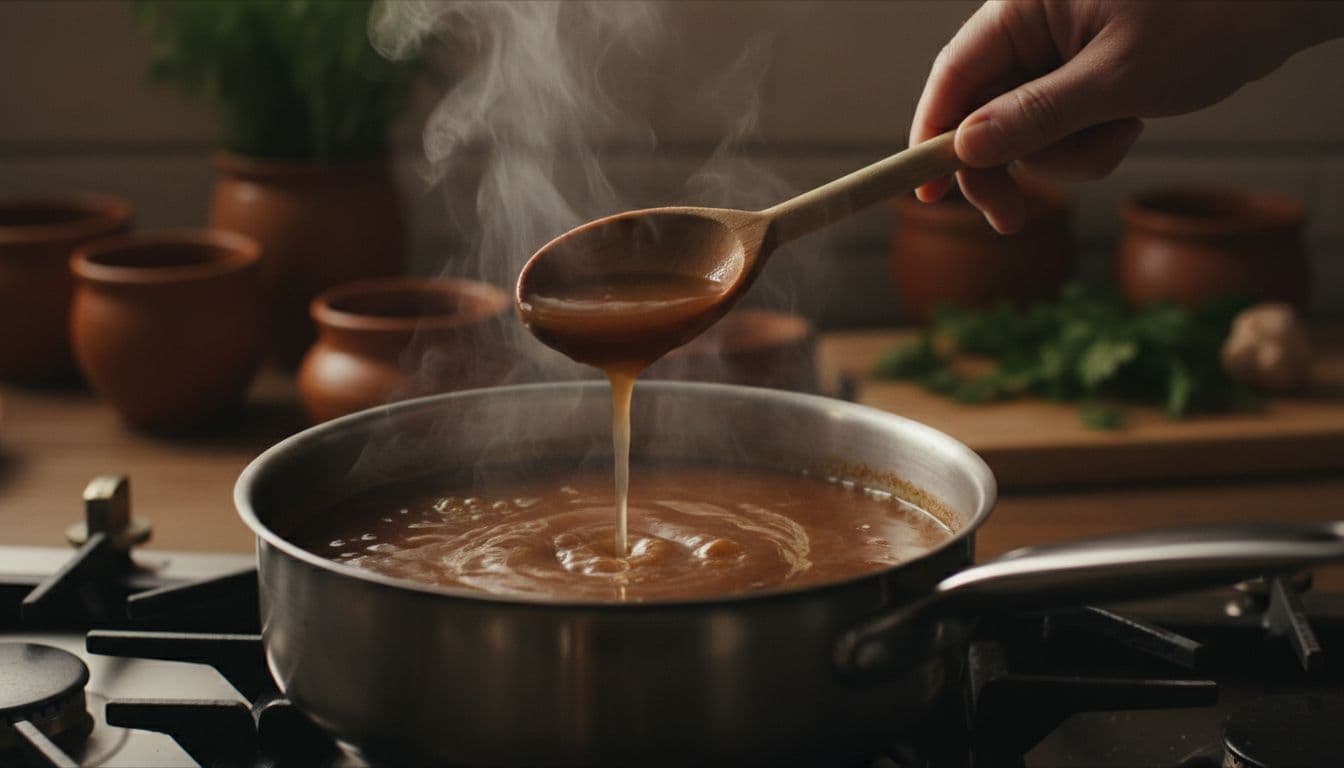
When a sauce is too thick, the safest fix is simple, add liquid in small amounts and stir well after each splash. Don’t pour in a big stream and hope for the best. That’s how you trade one problem for another.
Add a little, stir, wait 15 seconds, then check again. Sauce texture changes fast.
Add the right liquid, a little at a time
Match the liquid to the sauce whenever you can. Use broth for gravy and stock-based sauces. Add milk or cream to dairy sauces. Loosen tomato or pasta sauce with a spoonful of pasta water. For pan sauces, wine, stock, or even a bit of water works well.
If nothing matches, use water. It won’t add flavor, but it can still rescue texture. That’s much better than serving a sauce that clumps or won’t spread.
Go slowly. Start with 1 tablespoon for a small pan, or 2 tablespoons for a larger batch. Whisk or stir fully before adding more. A thick cheese sauce may look stubborn at first, then suddenly relax.
Use gentle heat to loosen the texture
Low heat helps a tight sauce smooth out. Stirring over gentle warmth lets the added liquid blend in without shocking the sauce.
This matters most for cream, cheese, and butter sauces. High heat can make them split, turn oily, or go grainy. If that starts to happen, pull the pan partly off the burner and keep stirring.
A stiff pasta sauce may also loosen once it warms with a splash of pasta water. That starchy water helps the sauce cling to noodles instead of sliding off. If you want more ideas for loosening a too-thick sauce, this home cooking guide to thinning sauce explains the same small-step approach.
How to thicken a sauce that is too thin
Thin sauce calls for a slightly different mindset. First, try the most natural fix. If that won’t work in the time you have, move to a faster method.
Most importantly, don’t dump dry flour or cornstarch straight into hot sauce. It clumps on contact, and those lumps can be hard to whisk out.
Simmer and reduce for the best flavor
Reduction is often the best fix because it improves taste as well as texture. Cook the sauce uncovered over a steady simmer, not a rolling boil. Then stir often so the bottom doesn’t scorch.
This method works especially well for tomato sauce, stock-based sauce, and many pan sauces. As water cooks off, the sauce thickens and the flavor becomes deeper.
Still, watch the clock. Reduction takes a little patience. If dinner is on the table in five minutes, you may need a quicker move. For extra guidance on reduction, Simply Recipes’ sauce-thickening guide walks through when simmering works best.
Use a slurry when you need a quick fix
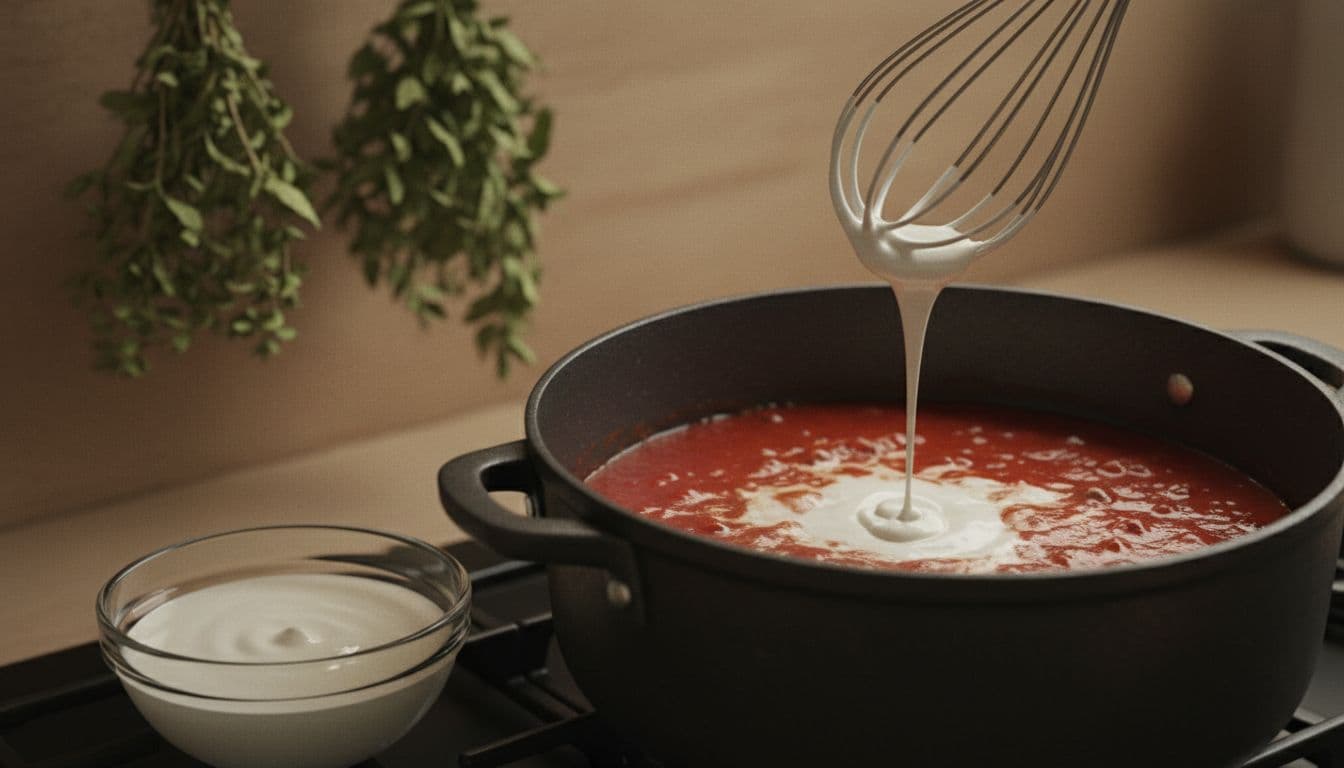
A slurry is the fastest rescue for many thin sauces. Mix cornstarch with cold water or cold broth until smooth, then whisk it into the simmering sauce.
A practical ratio used by many home cooks is 1 tablespoon cornstarch plus 1 tablespoon cold water for about 1 cup of liquid. Once it goes into the pan, let the sauce simmer for 30 to 60 seconds. That short cook time activates the starch.
You can do the same with flour, though flour usually needs a bit more cooking time to lose its raw taste. Either way, keep the liquid cool when you mix it. Hot liquid causes lumps.
If you want another quick-reference method, McCormick’s thickening tips cover common starch options in plain language.
Whisk in butter, cream, or egg yolk for a richer finish
Not every thin sauce needs starch. Some need body and shine more than bulk. In those cases, whisking in cold butter off the heat can help. It slightly thickens the sauce and gives it a glossy finish.
Cream works well when a dairy sauce feels thin but the flavor already fits. Add a small splash, warm gently, and stir until smooth.
Egg yolk is best for silky sauces that need richness, not weight. Temper it first by whisking in a spoonful of warm sauce before adding it to the pan. That step keeps the yolk from scrambling. For a quick roundup of fast fixes for runny sauce, this Delish article on thickening sauce is a useful reference.
Match the fix to the kind of sauce you are making
The smartest fix depends on the sauce in front of you. A tomato sauce behaves differently than gravy, and cheese sauce needs a gentler hand than a pan sauce.
Here’s a quick way to match the method to the sauce:
| Sauce type | If it’s too thick | If it’s too thin |
|---|---|---|
| Tomato sauce | Add pasta water or a splash of water | Reduce uncovered |
| Pasta sauce | Add pasta water, then toss with noodles | Reduce, or use a small slurry |
| Pan sauce | Add stock, wine, or water | Reduce, then finish with butter |
| Gravy | Whisk in warm broth | Simmer, or add slurry |
| Cheese sauce | Add warm milk a little at a time | Add more roux base or a small slurry |
| Cream sauce | Add milk or cream gently | Simmer gently, or add a touch more cream |
That’s the big takeaway, match the fix to the sauce, not to a random rule.
For tomato, pasta, and pan sauces
Reduction is usually the first move here. These sauces often improve when they cook down a bit more.
If they get too thick, small liquid changes work best. Pasta water is especially helpful because it loosens and binds at the same time. A pan sauce often responds well to stock or wine, because those liquids fit the flavor already in the skillet.
For gravy, cheese sauce, and cream sauce
These sauces need a softer touch. Broth is best for gravy. Milk or cream fits cheese and cream sauces better.
If they’re too thin, use a slurry or build more roux base if you have time. Keep the heat moderate, though, because cheese sauce can turn grainy when it gets too hot.
Simple tips to prevent sauce texture problems next time
Most sauce trouble starts long before the final spoon test. A few habits make a big difference.
First, check texture close to serving time, not just early in cooking. Sauces change as they reduce, sit, and cool.
Next, keep heat moderate unless you’re reducing on purpose. High heat steals moisture fast and can break dairy-based sauces.
Also, add thickeners slowly. A little flour, slurry, cheese, or puree goes farther than most people expect. Once a sauce gets too tight, you can fix it, but it’s easier not to push it there.
If the sauce coats the back of a spoon and leaves a clean line when you swipe a finger through it, you’re close.
Finally, stir often and trust small adjustments. Good cooks rarely nail sauce by luck. They watch, taste, stir, and adjust.
A small fix usually does the job
Most sauces don’t need a full restart. They need a calm hand and one smart adjustment. If the sauce is too thick, add liquid a little at a time. If it’s too thin, reduce it or thicken it gently.
That’s the whole pattern, and it works more often than not. The best cooks aren’t perfect on the first try, they keep tuning the pan until the sauce feels right.
The next time dinner is ready and the sauce looks off, don’t scrap it. Make one small move, then another, and let texture come back under your spoon.