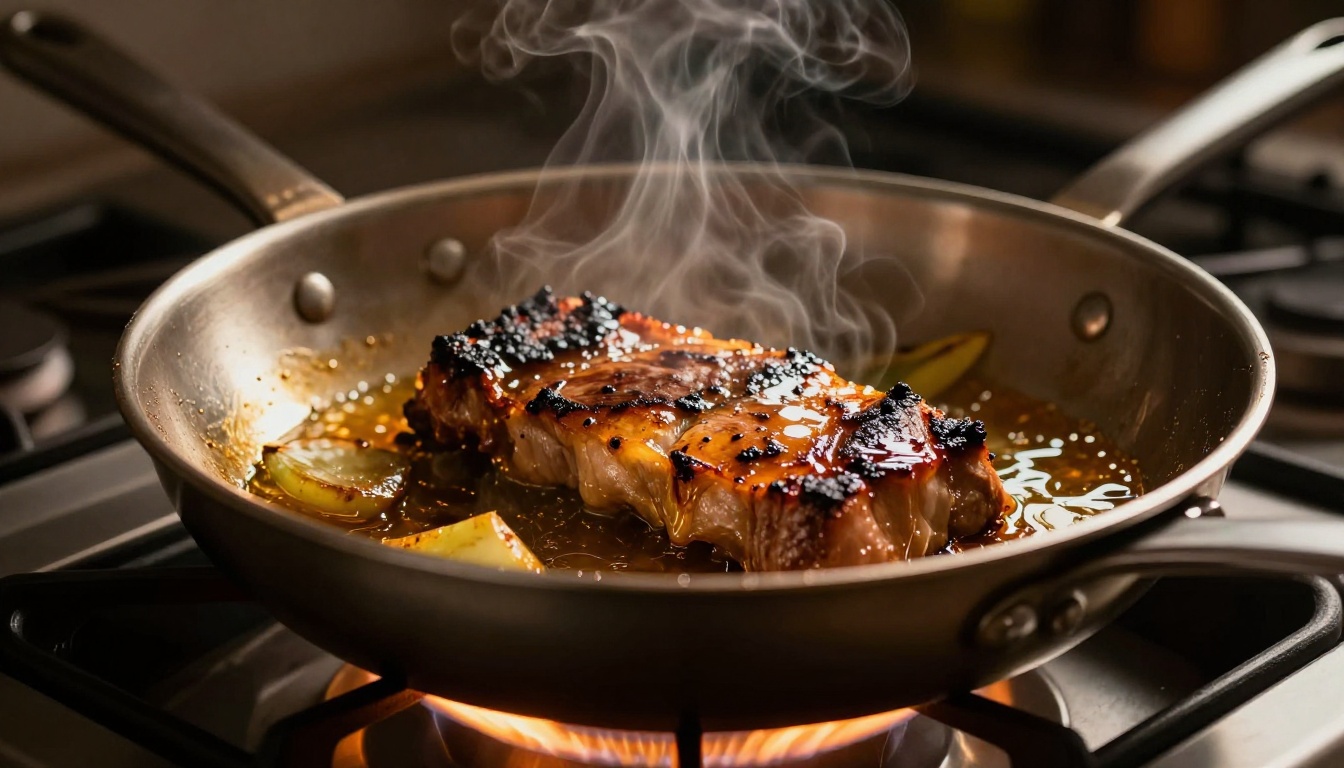
Food looks fine one minute, then suddenly it’s scorched, bitter, and stuck to the pan. If that keeps happening, the problem usually isn’t bad luck. It’s usually too much heat, the wrong pan, the wrong oil, poor timing, overcrowding, or a cooking method that doesn’t fit the food.
The good news is that burnt food is often easy to fix once you spot the real cause. A few small changes can turn your stove and oven from chaotic to predictable.
The most common reason food burns quickly is heat that is too high
High heat is the biggest reason food burns fast. It hits oils, sugars, sauces, and thin foods first. Meat can burn outside before the center is done. Vegetables can blacken at the edges while staying raw in the middle. Even eggs can go from soft to tough in seconds.
More heat doesn’t always mean faster cooking. It often means the surface cooks too fast while the inside struggles to catch up.
How to tell when your burner or oven is running too hot
The signs are easy to miss at first. Then they show up all at once.
If your oil starts smoking, your pan has likely crossed the line. If food gets dark in under a minute, that’s another clue. Loud, aggressive sizzling can also mean the burner is hotter than you think. So can a sharp burnt smell before the food even looks done.
Some stoves run hotter than the dial suggests. Older electric coils and some gas burners can have hot spots, too. Ovens can drift off temperature as well. If cookies burn on the bottom or casseroles brown too fast, it may help to check why an oven or range starts burning everything.
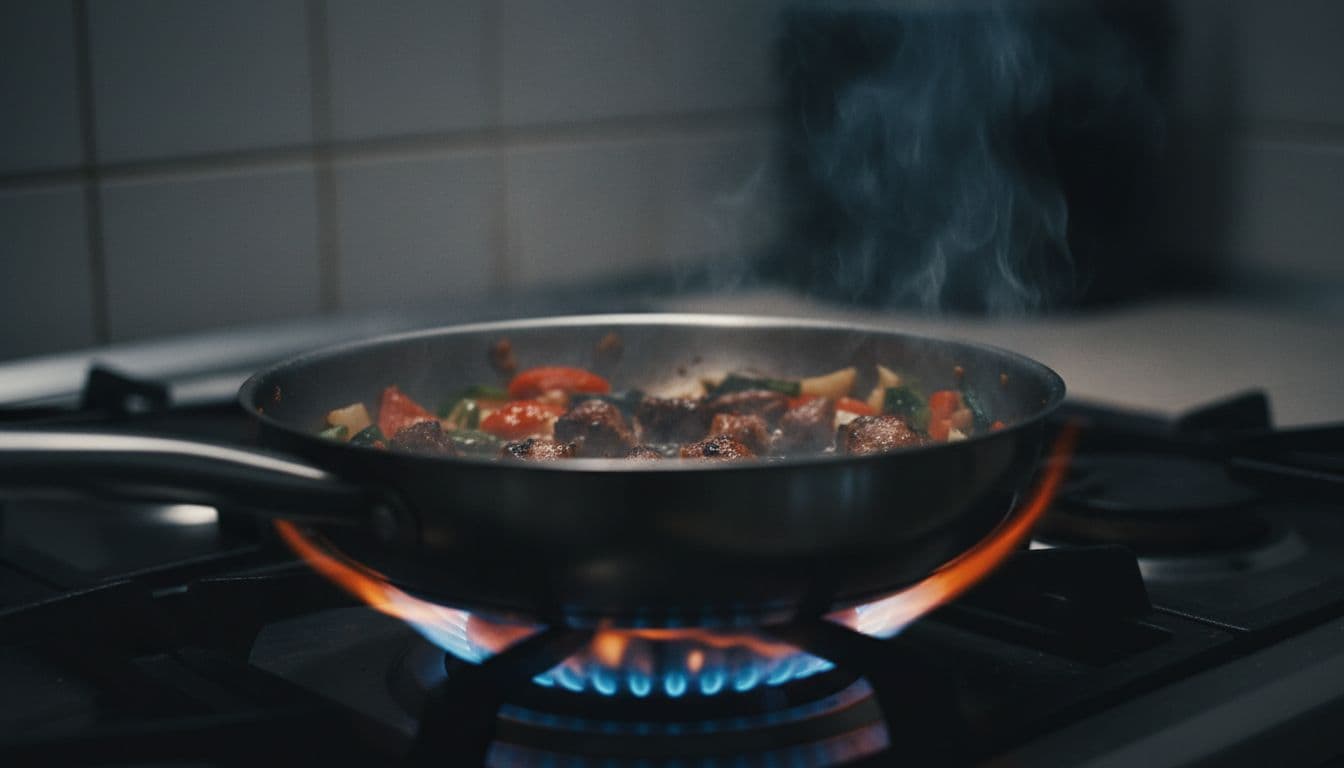
If food browns long before it cooks through, the heat is too high for that recipe.
Medium heat is often the safest place to start. Then adjust up or down after you see how your pan responds.
How to lower the heat without ending up with soggy food
Lower heat doesn’t mean limp food. It means better control.
Start by preheating the pan over medium, not high. Give it a minute or two. Then add oil, and let the oil warm briefly before adding food. For meat, you can sear over medium-high for color, then lower the heat to finish cooking. That keeps the outside from turning black.
Also remember that pans and ovens hold heat. If the pan gets too hot, turning the knob down won’t cool it right away. Move the pan off the burner for a few seconds if needed. In the oven, food keeps cooking even after the temperature drops.
Small ingredients burn even faster. Garlic is a classic example, which is why cooks often add it later. This quick look at why garlic burns so fast explains why timing matters so much with delicate foods.
If you see smoke, turn off the heat right away. If something flares up, cover the pan and never throw water on it.
Your cookware, oil, and pan setup can make food burn faster
Sometimes the problem isn’t the recipe. It’s the gear.
A thin pan can act like a stovetop magnifying glass. One spot gets screaming hot while another stays mild. Meanwhile, the wrong oil can start smoking before the food even has time to brown properly.
Why thin, dark, or dirty pans scorch food so easily
Thin pans heat fast, but they don’t heat evenly. That creates hot spots, which burn food in patches. Dark metal can also absorb more heat, especially in the oven, so the bottom of baked food browns too fast.
Old grease is another hidden cause. Burnt bits left in a skillet will scorch fresh food almost at once. The same goes for grease splatters on the stovetop or residue on the oven floor. Those leftovers smoke, smell bad, and can throw off how your food cooks.
A heavier pan gives you more control. Stainless steel with a thick base usually heats more evenly than a flimsy nonstick pan. Cast iron holds heat well, but it can stay hot longer than expected, so you need to lower the burner earlier.
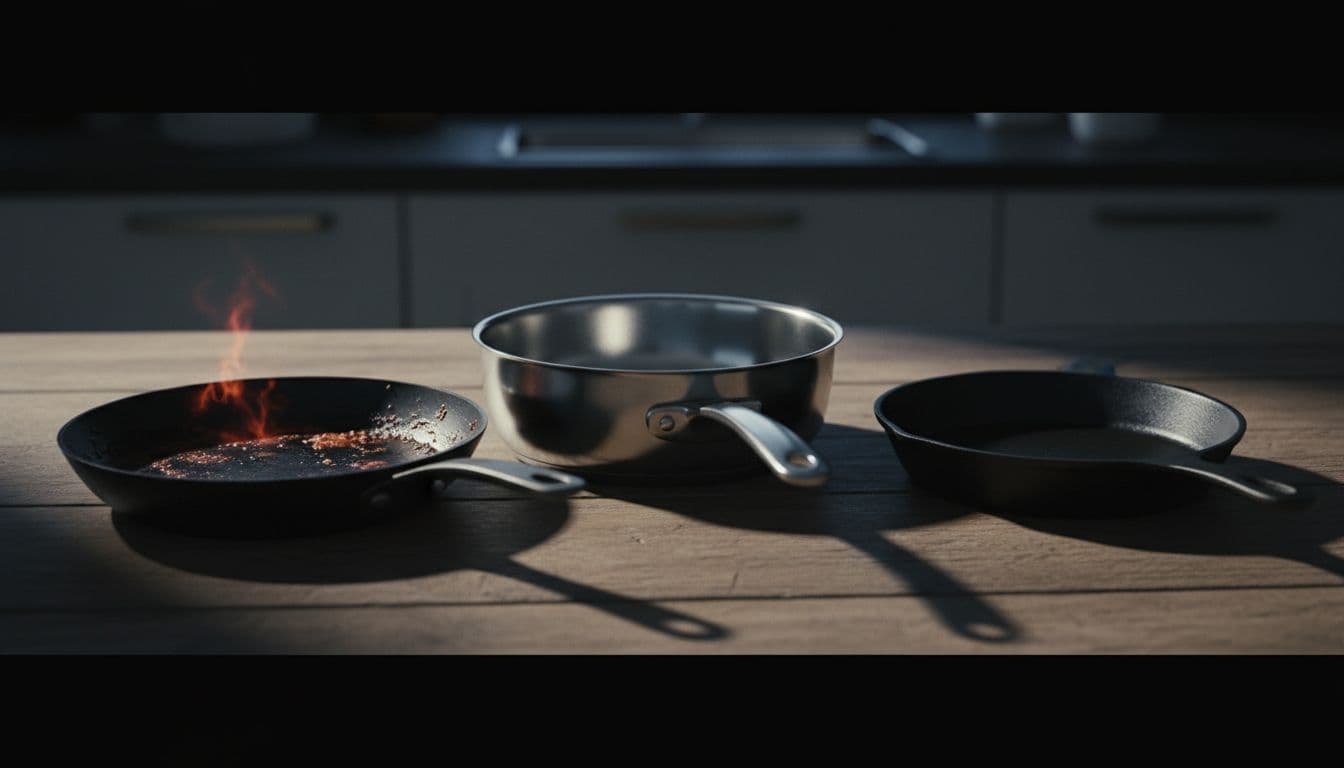
Cleaning matters more than many people think. A clean pan gives you a fresh start. A dirty one quietly sabotages dinner.
Choosing the right oil so it doesn’t smoke and burn
Smoke point sounds technical, but the idea is simple. It’s the temperature where oil starts to smoke and break down.
For higher-heat cooking, oils like canola or refined avocado oil usually give you more room before smoking. Butter burns faster, especially on its own. Extra-virgin olive oil can work for moderate heat, but it isn’t the best choice for every pan-sear.
If you want a quick reference, this cooking oil smoke point chart shows why some fats fail sooner than others.
Watch the pan, not only the recipe. Oil should look loose and shiny. It should not send up smoke. If it does, pull the pan off the heat and start over with fresh oil if needed.
Small cooking habits that lead to burnt food
Even with the right heat and pan, food can still burn because of timing. In home kitchens, the biggest trouble often starts when attention slips for a minute.
Recent US home cooking safety advice keeps repeating the same point: stay nearby, use timers, and keep grease buildup under control. That advice isn’t only about fire safety. It also saves dinner.
Not stirring, walking away, and missing the moment food turns
Some foods need almost no babysitting. Others need you close by.
Sauces, onions, rice, eggs, oatmeal, and chopped vegetables can all scorch at the bottom before the top looks done. That’s why stirring matters. Scraping the bottom of the pan matters too. If starches or dairy sit still too long, they cling, darken, and then spread that burnt flavor through the whole dish.
Set a timer, even for short cooks. Thirty seconds can be the difference between golden and burnt when you’re frying garlic, reducing sauce, or cooking eggs.
Stay near the stove when frying, broiling, or searing. That habit helps with both taste and safety. Food doesn’t announce the exact second it crosses the line. It whispers first, then suddenly shouts.
Why overcrowding the pan ruins heat control
Too much food in one pan creates a mess of steam, uneven browning, and patchy burning. The pan cools down when you add a big pile of food, especially if it’s cold or wet. Then moisture builds up. Some pieces steam. Others sit against the hottest metal and scorch.
The fix is simple. Cook in batches. Leave space between pieces. Pat meat and vegetables dry before they hit the pan.
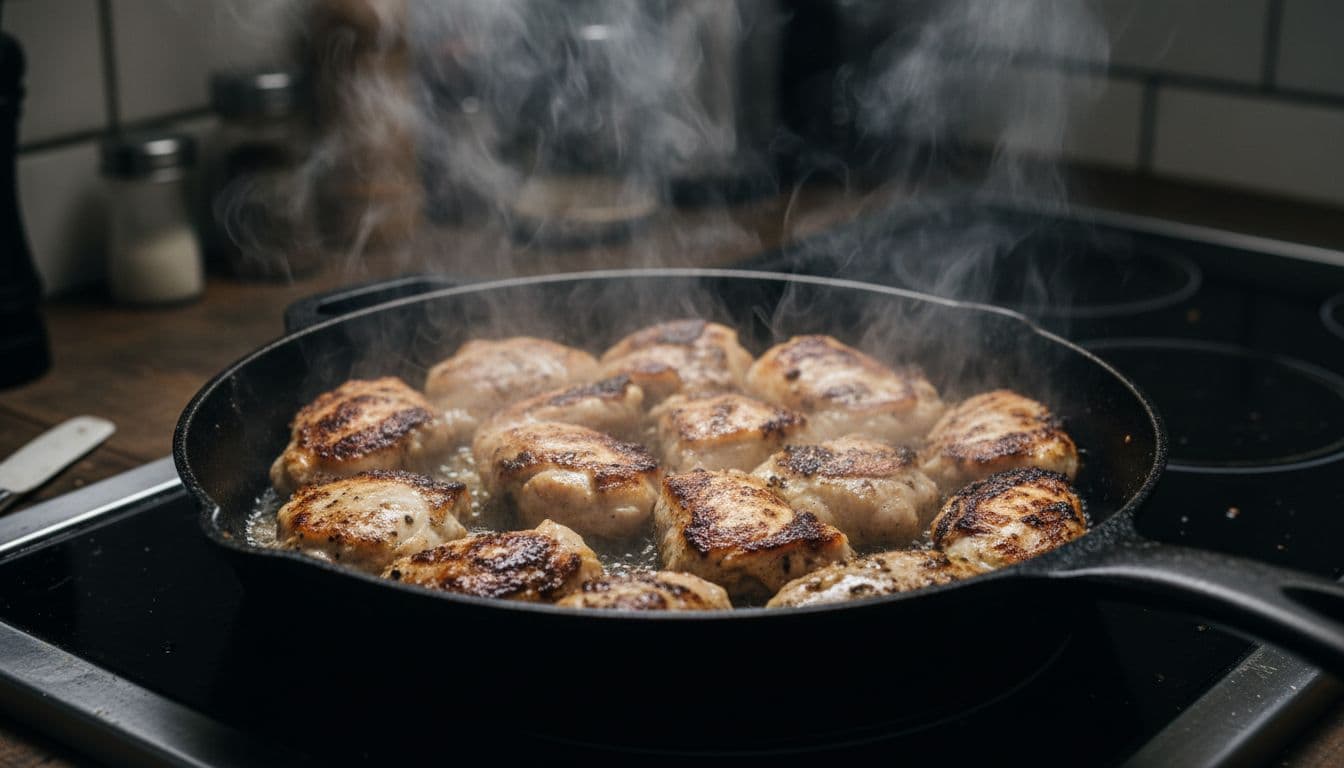
This matters most with chicken, mushrooms, and watery vegetables. If everything is piled together, the pan can’t do one job well. It can’t brown evenly, and it can’t keep moisture moving out fast enough.
The fix depends on what you are cooking
Burning isn’t one single problem. Meat, vegetables, sauces, and grains all fail in different ways. Once you match the method to the food, things get much easier.
If meat burns on the outside before the inside is done
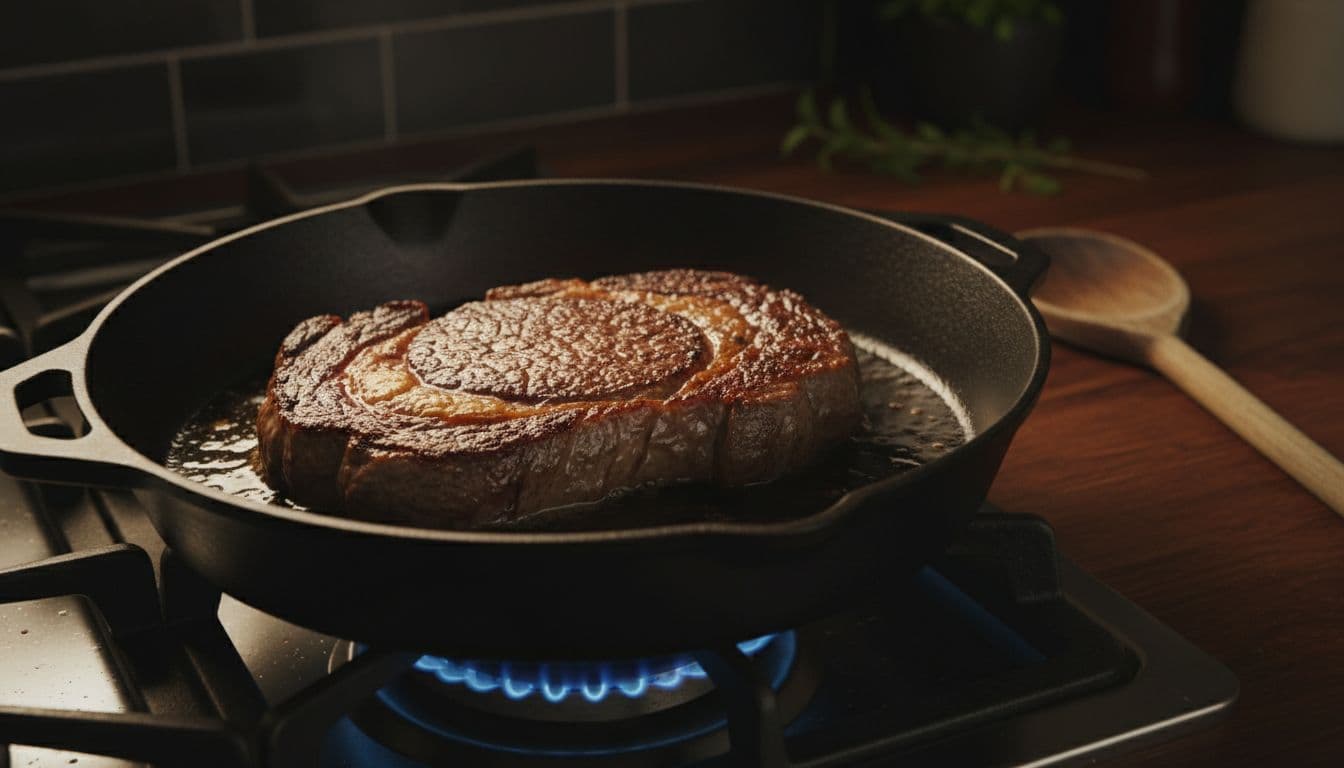
Thick cuts often need two stages. First, sear briefly for color. Then lower the heat or move the meat to a 350°F oven to finish.
Pat the meat dry before it hits the pan. Surface moisture slows browning at first, then can lead you to overheat the pan. Sugary marinades also burn quickly, so wipe off extra glaze before searing. Fatty meats can drip and smoke, which makes the surface darken fast.
A thermometer helps more than guesswork. It’s the cleanest way to stop overcooking the outside while chasing the inside. If you want a solid method, Serious Eats explains how to get a juicy steak with a perfect crust.
If vegetables char too fast or turn black at the edges
Cut vegetables into even pieces so they cook at the same pace. Use medium heat for stovetop cooking unless you’re after a fast stir-fry. Then toss them often.
Don’t add sweet glaze too early. Sugar burns fast, especially with honey, maple syrup, or bottled sauces. Wait until the last few minutes, or roast first and glaze later.
High-water vegetables can fool you. Zucchini, peppers, mushrooms, and onions may steam at first. Then, once the water cooks off, they can burn quickly if left in one place too long. Move them around and keep an eye on the pan.
If sauces, grains, or dairy-based foods keep sticking and scorching
These foods usually burn from the bottom up. The top can look fine while the base turns dark and bitter.
Use a heavier pot if you have one. Keep the heat low and aim for a gentle simmer, not a hard boil. Stir more often than you think you need to, especially near the end when the mixture thickens. If the sauce or porridge starts getting too dense, add a small splash of water, broth, or milk.
Rice needs the right ratio and a tight lid. Once it simmers, low heat matters. Too much flame can burn the bottom before the steam finishes cooking the top. Cream sauces and cheese sauces need the same calm approach. Slow cooking wins here.
Burnt food can feel random, but it usually isn’t. Lowering the heat, using the right pan and oil, keeping the pan clean, avoiding overcrowding, and matching the method to the food will fix most cases.
The best next step is simple: change one variable at a time. Turn the heat down, switch pans, or cook in smaller batches. Once you isolate the cause, burnt dinners stop feeling like a mystery and start feeling fixable.