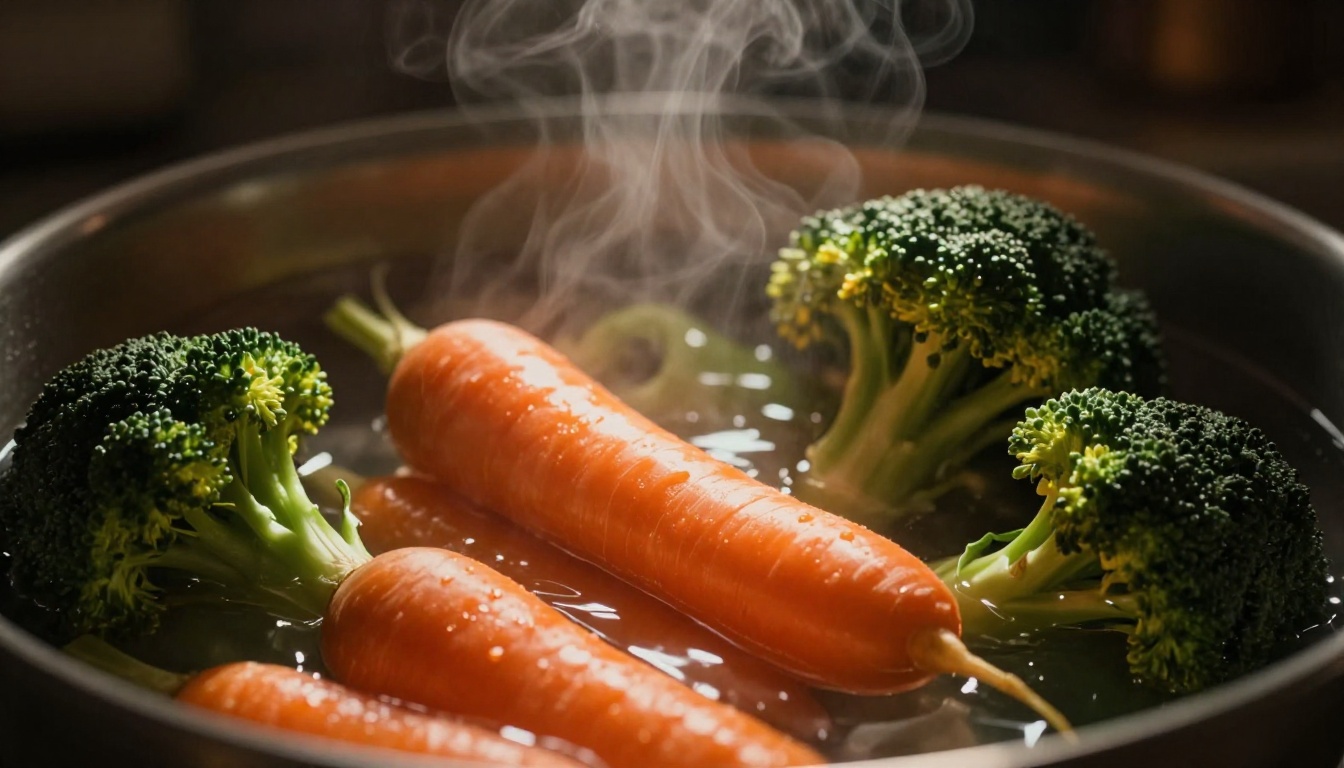
You start with bright, fresh vegetables, then end up with something limp, watery, or mushy. It’s one of the most common kitchen letdowns, and it usually comes down to too much heat, too much time, or too much moisture.
Vegetables are supposed to soften as they cook. That part is normal. The trouble starts when cooking goes a step too far and the structure breaks down faster than you expect.
Once you know what causes that texture change, it’s much easier to fix.
The real reason vegetables turn too soft when cooking
Vegetables hold their shape because their cells have firm walls. As heat builds, those walls weaken. That makes vegetables more tender, sweeter, and easier to bite through.
The problem is simple: if the heat keeps going, the structure keeps falling apart. Then the vegetable loses its bite and turns floppy.
Heat breaks down the parts that keep vegetables firm
Three parts do most of the work here: pectin, cellulose, and hemicellulose. You don’t need to memorize them, but it helps to know what they do.
Think of them like the frame of a house. They help broccoli stay snappy, carrots stay sturdy, and green beans keep some bend without collapsing. As they soften, the vegetable relaxes. As they soften too much, it slumps.
That is why a carrot can go from pleasantly tender to baby-food soft in a short window.
Water can make vegetables steam instead of brown
Moisture changes everything. If vegetables are wet, crowded, or cooked in too much water, they steam before they brown. Steaming isn’t bad by itself, but too much of it makes vegetables soft fast.
This happens when you boil too long, steam with the lid on too long, or pile too many pieces into one pan. Instead of dry heat hitting the surface, trapped water surrounds the vegetables.
For a deeper look at roasting texture, these chef tips on crisp vegetables explain why browning needs space and dry heat.
The most common mistakes that make vegetables mushy
Most mushy vegetables come from a few repeat mistakes. The good news is that each one is easy to spot.
Cooking them too long, even by a few minutes
Many vegetables need less time than people think. Broccoli, green beans, zucchini, and bell peppers often cook in minutes, not in long stretches.
If you wait until they look fully soft in the pan, you’ve usually gone too far. They keep cooking a bit after you remove them, so start checking early.
Cutting vegetables too small or unevenly
Small pieces cook quickly, dry out fast, and can fall apart before the rest of the batch is done. Uneven pieces create a different problem. Tiny bits go mushy while large chunks stay underdone.
Larger, even cuts give you more control. They also brown better because they don’t collapse as quickly.
Using the wrong method for the type of vegetable
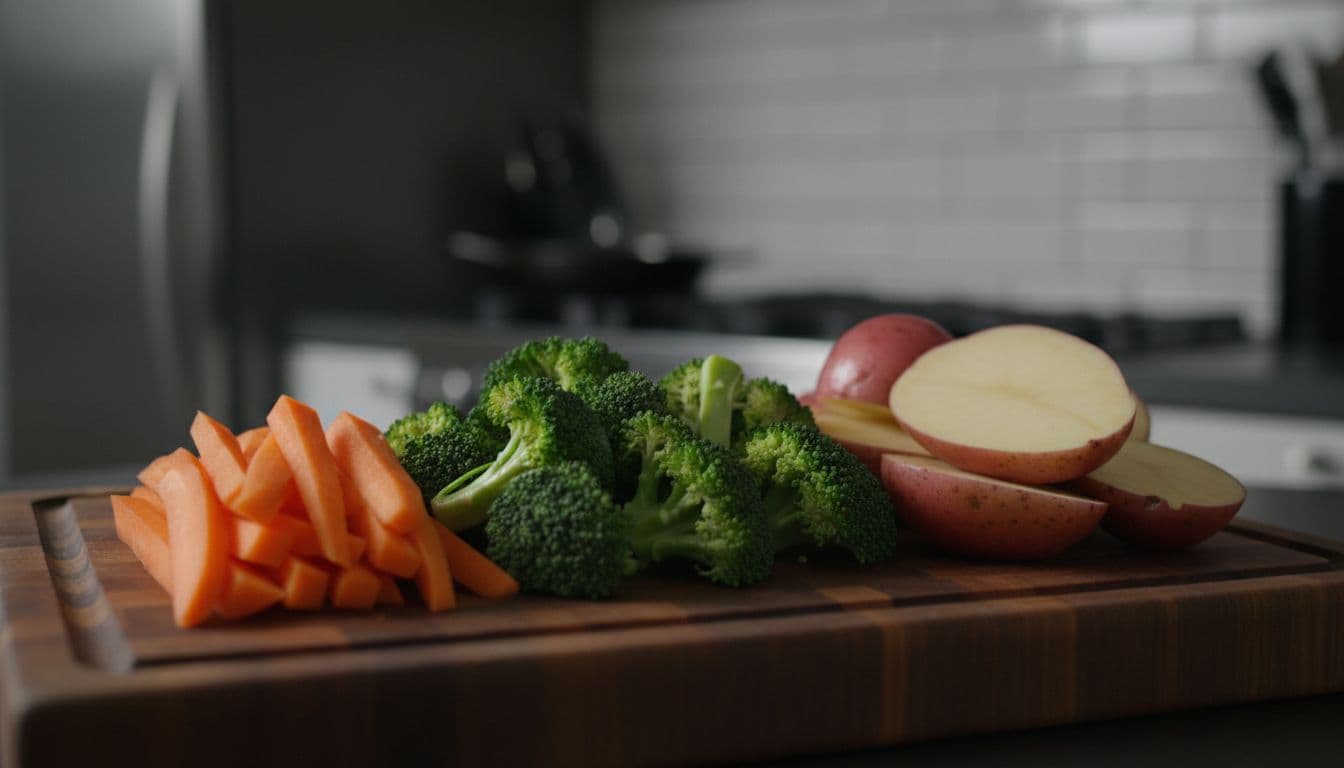
Soft vegetables, like zucchini, summer squash, and eggplant, can overcook fast in water. Dense vegetables, like carrots, potatoes, and Brussels sprouts, need more time and often do better with roasting or a controlled sauté.
In other words, not every vegetable wants the same treatment. Zucchini doesn’t need the same approach as a potato, even if they share a pan.
How to keep vegetables tender, not too soft
Better texture comes from controlling heat, moisture, and timing. Small changes make a big difference.
Use high heat and give vegetables enough space
Medium-high to high heat helps the outside cook fast while the inside stays firmer. That matters most when roasting or sautéing.
Also, don’t crowd the pan or sheet tray. When pieces touch too much, steam gets trapped. A single layer works better, especially on a heavy metal pan. This roasting habit to break shows why spacing matters so much.
Match the cooking time to the method
These time ranges are a solid starting point:
| Method | Typical time | Best texture cue |
|---|---|---|
| Sauté or stir-fry | 3 to 8 minutes | Bright, browned spots, still firm |
| Steam | 3 to 7 minutes | Tender with slight resistance |
| Brief boil | 2 to 5 minutes | Cooked through, not falling apart |
| Roast | 20 to 40 minutes | Caramelized edges, tender center |
Dense vegetables sit on the longer end. Softer ones finish fast. The goal is crisp-tender, not limp.
Stop the cooking at the right moment
Carryover cooking is real. Even after the heat is off, vegetables stay hot and keep softening.
Pull vegetables off the heat when they’re slightly firmer than you want.
Test with a fork or the tip of a knife. For boiled vegetables, an ice-water bath stops the cooking quickly and helps keep texture.
Best cooking methods for vegetables that stay firm and flavorful
If texture matters, the method matters just as much.
Roasting for caramelized edges and a firmer bite
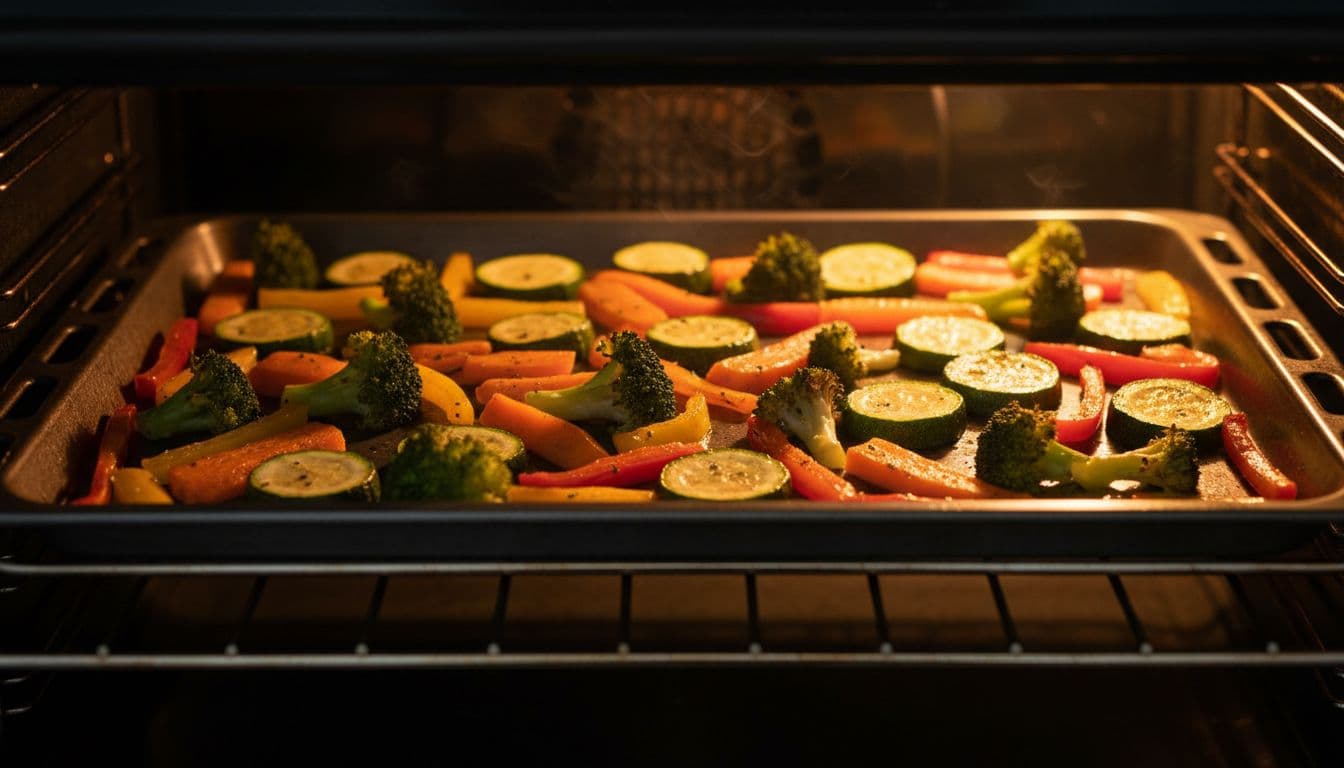
Roasting works best at 425°F or higher. Preheat the oven fully, use a hot sheet pan if you can, and spread the vegetables in one layer.
A bare baking sheet often browns better than parchment because less steam gets trapped. Dry the vegetables well, coat lightly with oil, then leave them alone long enough to color.
Sautéing and stir-frying for quick, crisp-tender results
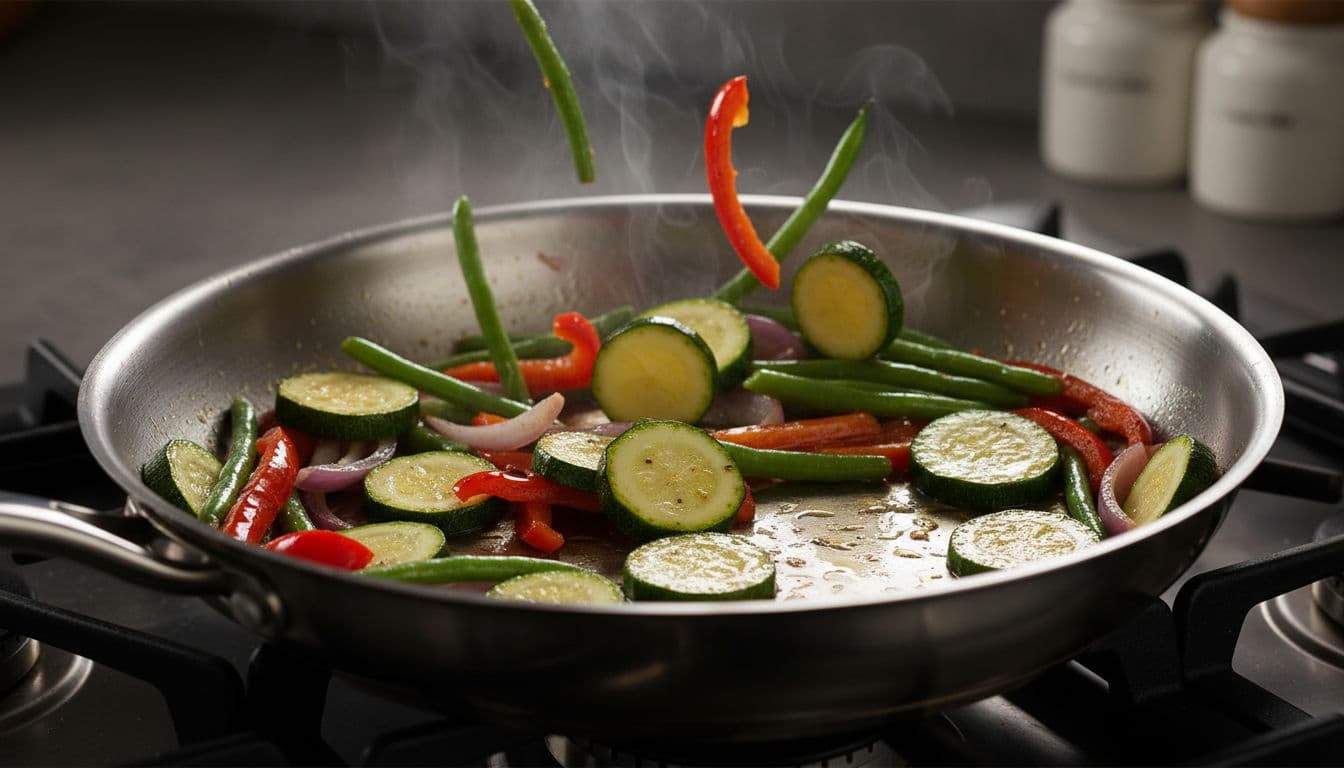
Use a wide, hot pan and a small amount of oil. Add vegetables in batches if needed so they touch the pan instead of piling up.
Stir enough to prevent burning, but not so much that they sweat. Fast cooking and direct contact help vegetables stay bright and a little snappy.
When steaming or boiling works, and how to do it carefully
Steaming and boiling can still work well, especially for broccoli, carrots, green beans, and potatoes. The key is short timing and close attention.
Softer vegetables usually don’t do well in boiling water. If you want a cleaner texture for dense vegetables, a quick blanch-and-sauté method can give you more control.
Mushy vegetables usually aren’t a mystery. They’re the result of overcooking, extra moisture, small cuts, crowding, or a method that doesn’t fit the vegetable.
The fix isn’t fancy. Use more heat, less time, and more space.
Next time your vegetables hit the pan, pull them a little earlier than feels safe. That’s often where better texture starts.