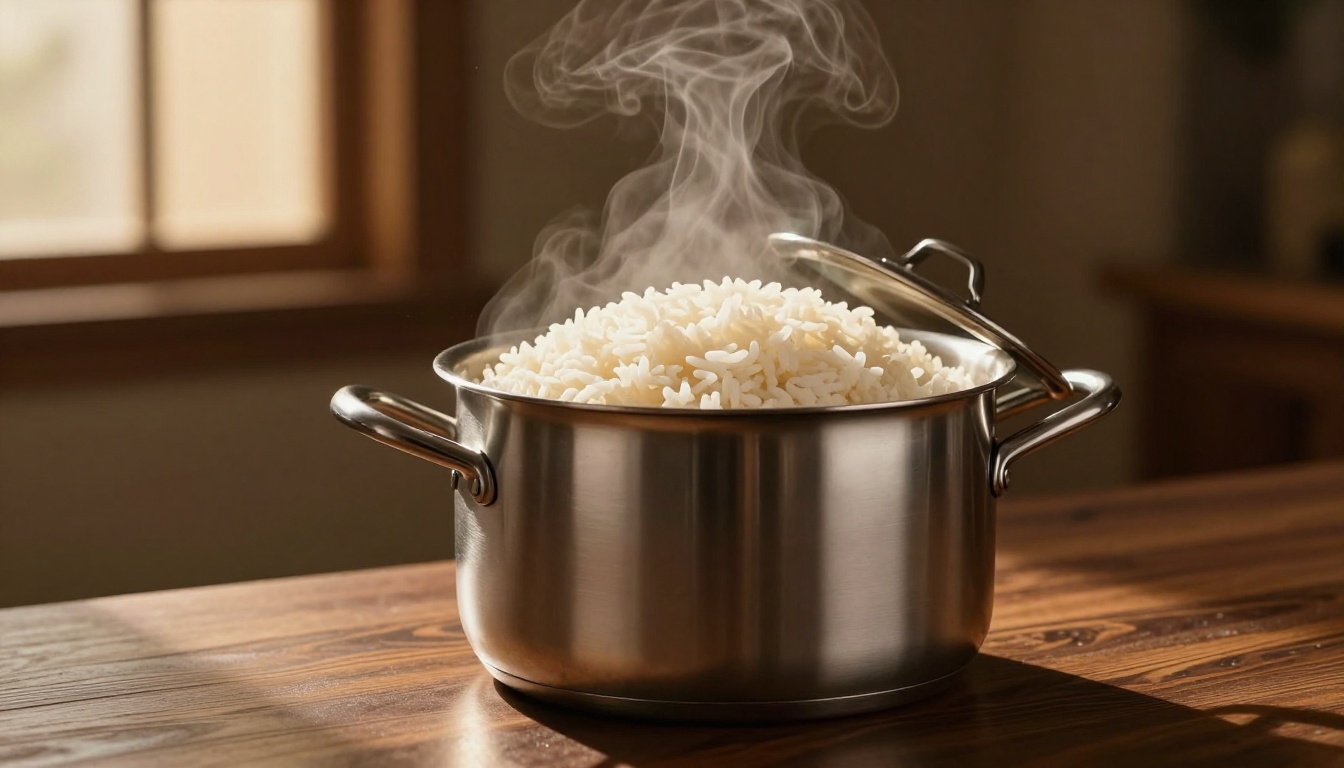
You can make fluffy, tender rice on the stove with a pot, a lid, and a simple method. It doesn’t take fancy gear, and it doesn’t need guesswork.
Most rice problems come down to four things, the right rice-to-water ratio, low heat, keeping the lid on, and letting the rice rest before fluffing. Once those pieces click, stovetop rice stops feeling like a gamble.
Start with the right setup for better rice every time
Before the heat goes on, a few small choices shape the whole pot. Rice is simple, but it’s also unforgiving. A thin pan, loose lid, or sloppy measuring can turn a cheap staple into a sticky mess.
A heavy-bottomed pot gives you the best shot at even cooking. It spreads heat better, so the bottom doesn’t scorch before the middle is done. A tight lid matters just as much because rice cooks with trapped steam, not dry heat.
Choose a pot that holds heat well and traps steam
A medium saucepan works well for most home cooks. A Dutch oven also does a great job because it holds steady heat and seals in moisture.
Thin pots heat fast, but they also create hot spots. That’s why one patch of rice burns while the rest stays wet. If you’ve ever scraped a brown crust off the bottom and wondered what went wrong, the pot may be the reason.
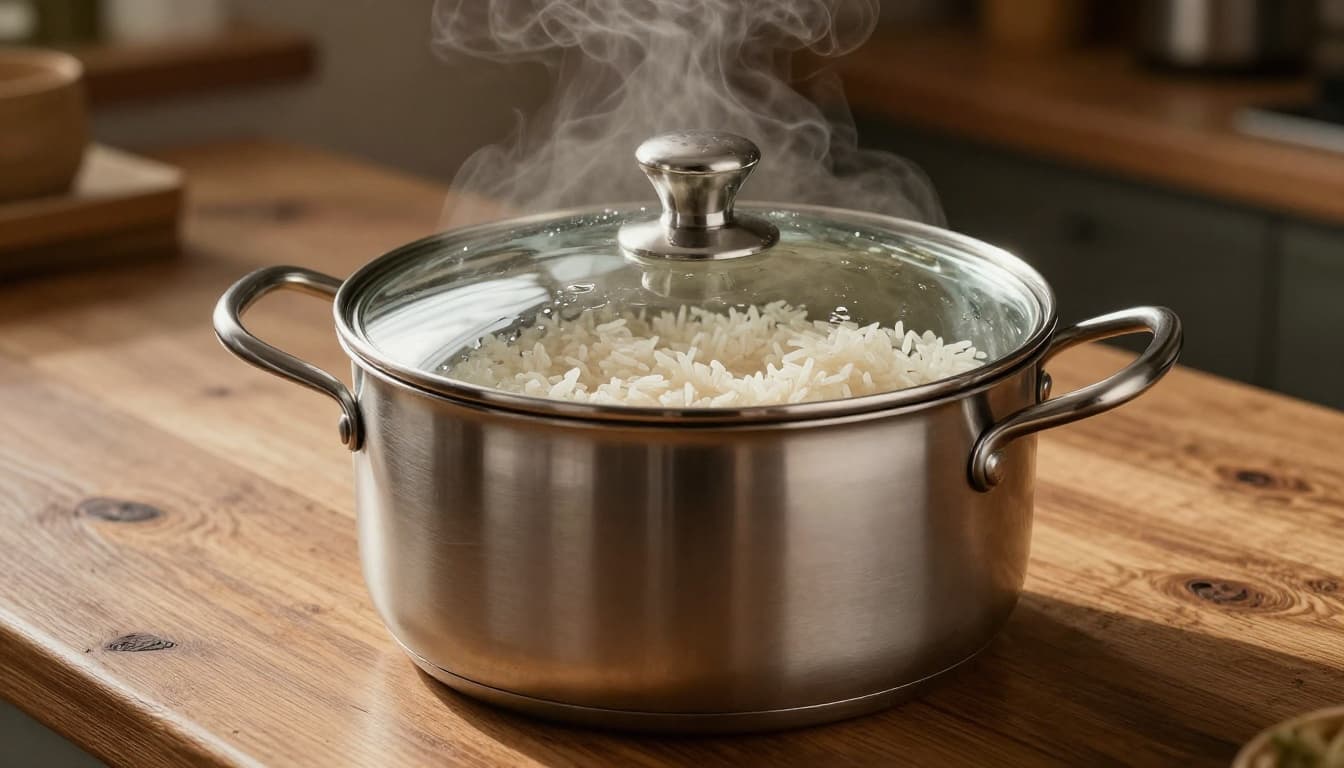
Measuring also matters more than people think. Eyeballing rice is like baking with your hand over your eyes. It might work once, then fail the next time. Use real measuring cups, especially when you’re still learning your stove.
For a broader look at how pot style and method affect water levels, this rice-to-water ratio chart is a handy reference.
Know when to rinse rice and when you can skip it
Rinsing rice under cold water removes extra surface starch. That helps grains cook up lighter and less gummy. It’s especially useful for white rice, jasmine, and basmati.
Put the rice in a fine-mesh strainer and rinse for 30 to 60 seconds. Swirl it with your fingers until the water looks much clearer. Then drain it well, because extra rinse water can throw off your ratio.
Still, don’t rinse blindly. Some packaged rice is pre-washed, enriched, or labeled “do not rinse.” In that case, follow the bag. The label is the tie-breaker.
If your rice often turns sticky, rinse first and drain well. That one step fixes a lot.
Use the best rice-to-water ratio for the type of rice you have
The biggest key to perfect rice is simple, measure carefully. Too much water makes mush. Too little leaves hard centers. Many people add more water than they need, especially with jasmine and basmati.
For 1 cup of rice on the stovetop, these are reliable starting points:
| Rice type | Water for 1 cup rice | Typical simmer time |
|---|---|---|
| White, long or medium grain | 1.5 cups | 13 to 18 minutes |
| Jasmine | 1.25 cups | 13 to 17 minutes |
| Basmati | 1.25 cups | 13 to 18 minutes |
| Brown rice | 2 cups | 40 to 45 minutes |
These ratios aren’t flashy, but they work. Your stove, pot, and lid can shift things a little, so treat them as your base line.
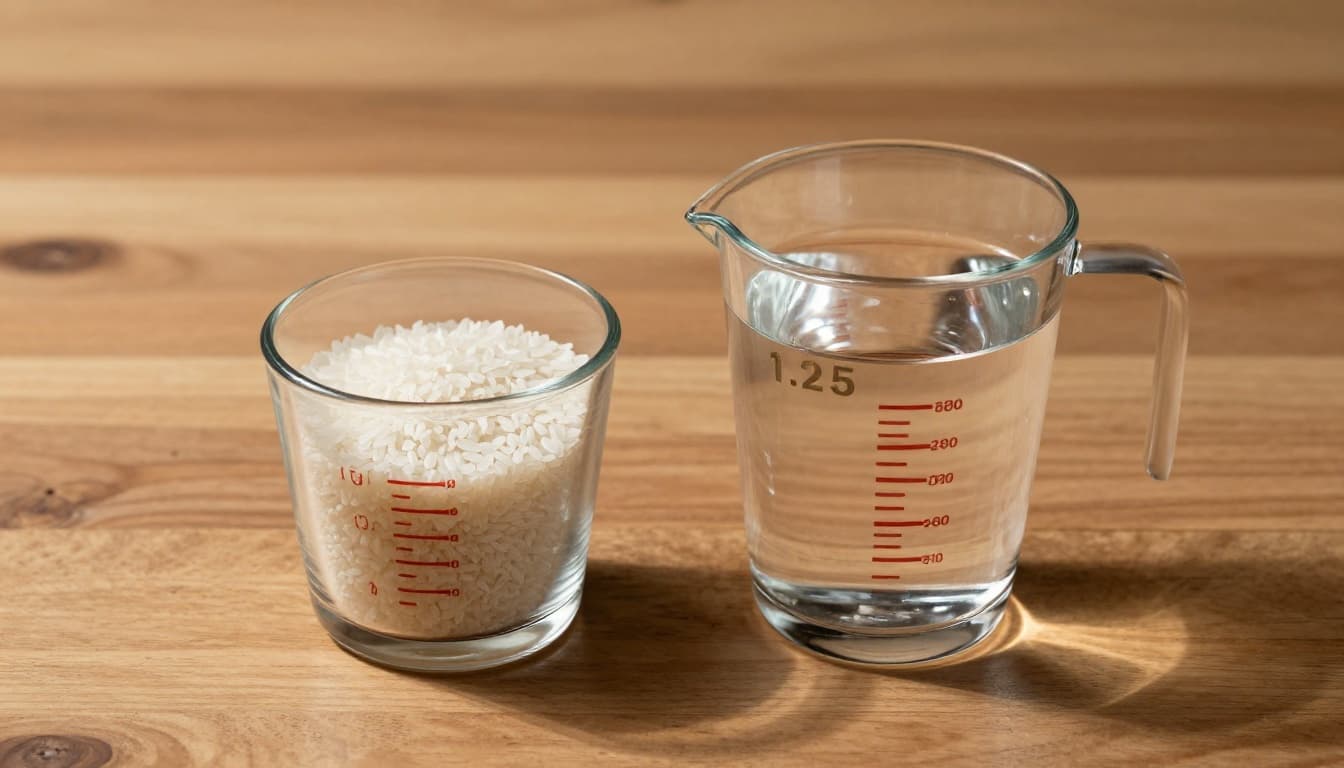
White rice, jasmine, and basmati need less water than many people think
A lot of older advice says 1 cup of rice needs 2 cups of water. That can work in some cases, but it often leaves modern stovetop rice too soft. As of 2026, common stovetop guidance still leans toward lower ratios for white rice, especially when the pot has a tight lid.
Jasmine and basmati usually shine with less water because they should stay light and separate. Their texture is closer to loose beads than mashed potatoes. If they come out clumpy, too much water is often the culprit.
If you’d like another point of comparison, this 2026 rice-to-water guide shows how different grains respond to different liquid levels.
Brown rice takes more water and a lot more time
Brown rice is the outlier here. It has a tougher outer layer, so it needs more water and a longer simmer. Plan on about 40 to 45 minutes, then give it a short rest off the heat.
Because it cooks slowly, brown rice also needs patience. High heat won’t help. It only dries the pot faster and raises the odds of a burned bottom.
Follow this simple stovetop method for fluffy, tender rice
Once your rice is measured and rinsed, the method is easy. The trick is not doing too much. Rice likes calm, steady heat and a closed lid.
Here is the flow that works for most white rice, jasmine, and basmati:
- Add the rice and measured water to the pot.
- Add a pinch of salt. If you want, add a little butter or oil.
- Bring it to a boil uncovered over medium-high heat.
- As soon as it boils, turn the heat to very low.
- Cover tightly and cook without peeking.
- Turn off the heat and let it rest, still covered, for 5 to 10 minutes.
- Fluff gently with a fork.
That sequence matters. Change one part, and the result changes too.
Bring it to a boil first, then turn the heat way down
The first boil gets the whole pot up to temperature. After that, low heat lets the rice absorb water slowly and evenly. Think of it like easing into a parking spot instead of slamming the brakes. Slow and steady gives you control.
Most white rice, jasmine, and basmati need about 13 to 18 minutes at a very low simmer. If you hear gentle hissing and see faint steam, that’s usually enough. You don’t want a rolling boil under the lid.
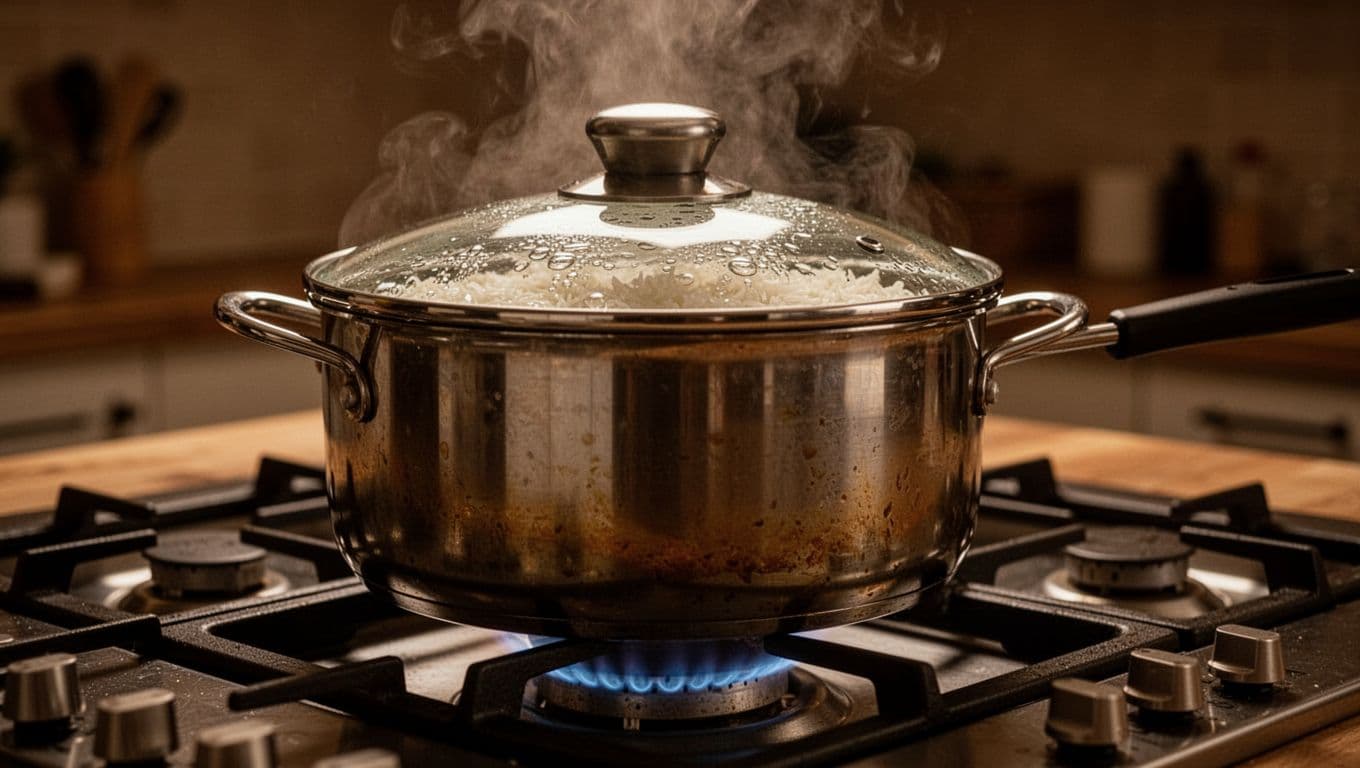
If your stove runs hot, move the pot to the smallest burner. Some cooks even shift the pot halfway off the burner for gentler heat. That’s often better than letting the bottom scorch.
For another look at timing and pot behavior, this step-by-step stovetop rice method lines up closely with what good home cooks already do.
Do not lift the lid, stir the rice, or rush the resting step
This is where many good pots of rice go off track. Lifting the lid lets steam escape. Stirring releases starch and turns fluffy grains sticky. Skipping the rest can leave the center undercooked, even when the outside looks done.
Keep the lid on through the full cooking time. Then, once the heat is off, leave it alone for 5 to 10 minutes. That rest lets the steam finish the job and settle the texture.
When it’s time to fluff, use a fork, not a spoon. A fork separates the grains without smashing them. A spoon presses and stirs, which makes the rice heavier.
Don’t judge the rice the second the burner turns off. The rest is part of the cooking, not an optional extra.
If you want another grain-by-grain comparison, this guide to liquid ratios for different rice types gives a useful side-by-side view.
Fix common rice problems and make your next pot even better
Even with a good method, rice can still misbehave now and then. That’s normal. The nice part is that rice problems are usually easy to read once you know what they mean.
What to do if your rice is mushy, wet, or sticky
Mushy rice usually means too much water, too much stirring, or steam escaping at the wrong time. A loose lid can also make you add extra water later, which only deepens the problem.
If the rice is already too wet, spread it on a tray or large plate for a few minutes. That lets steam escape and dries it out a bit. It’s not magic, but it can rescue dinner.
For next time, use a little less water and drain well after rinsing. Also, don’t stir once the water starts heating. Rice is not risotto.
How to save rice that is still hard in the middle
Hard or crunchy rice means it didn’t get enough moisture, enough time, or gentle enough heat. High heat often causes this because the water disappears before the center softens.
To fix the current pot, add a small splash of hot water, about 1 to 2 tablespoons for every cup of cooked rice. Cover it again, set it over low heat, and cook for a few more minutes. Then let it rest before fluffing.
If the bottom burns often, the heat is too high or the pot is too thin. If rice sticks to the pot, a little oil can help, but better heat control helps more.
Once you notice the pattern, the fix is usually clear. Rice tells on you. Burned bottom, heat too high. Wet top, too much water. Hard middle, not enough steam or time.
Perfect stovetop rice isn’t luck. It’s a repeatable habit built on good measuring, the right ratio, low heat, a closed lid, and a short rest.
Make it this way a few times, and your pot of rice will stop being a coin toss. It will become one of the easiest things you cook.
The next time you’re tempted to think you need a machine for perfect rice, try the pot again. Your stove can do the job beautifully.