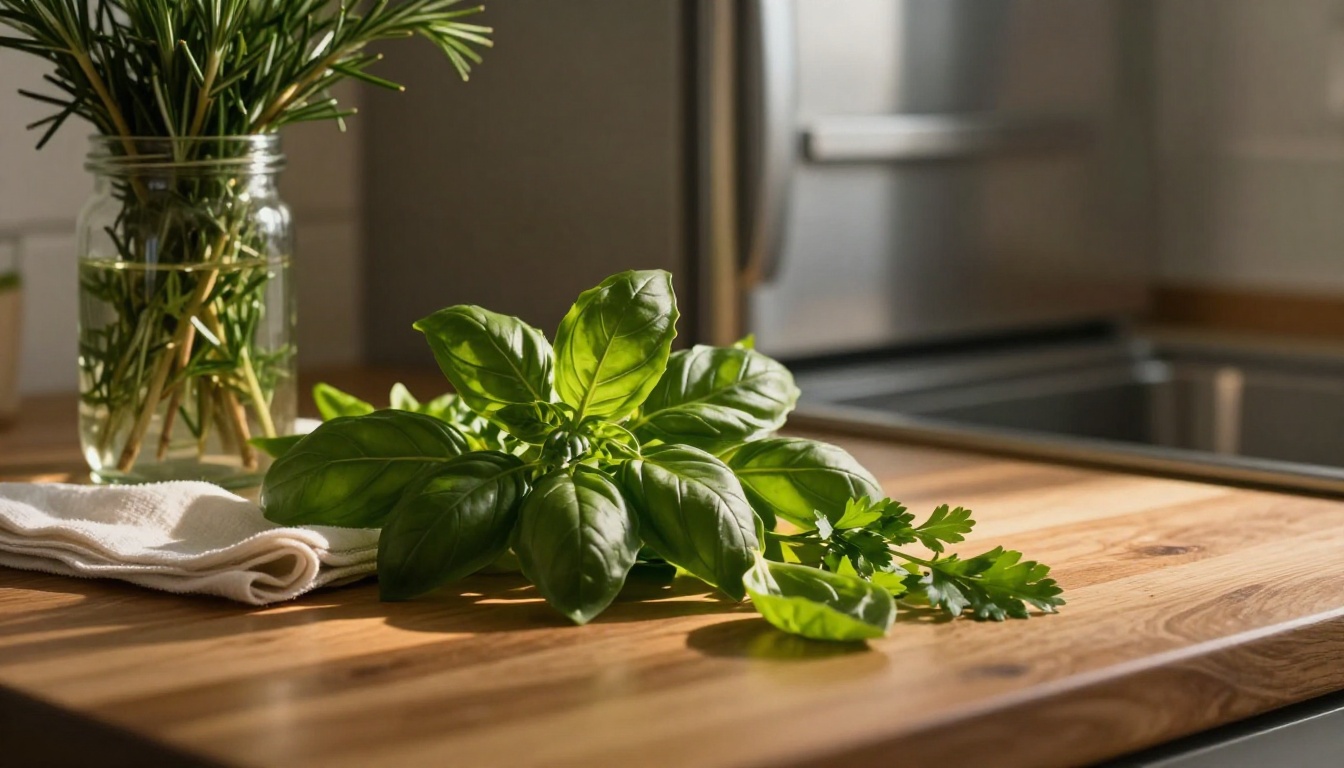
Fresh herbs can go from bright and fragrant to limp, slimy, or black in what feels like a day. That’s frustrating, especially when you only used a few sprigs and paid for a whole bunch.
The fix is simple once you stop treating every herb the same way. Fresh herbs last longer when you store them by type, soft herbs need more moisture, woody herbs need less, and basil belongs on the counter, not in the fridge.
Start with the real reason fresh herbs spoil so quickly
Herbs spoil fast because they lose balance. Too much water makes them rot. Too little dries them out. Cold air can also hurt delicate leaves, while trapped moisture invites mold.
Think of herbs like cut flowers mixed with salad greens. They still need some hydration after harvest, but they also need air. When leaves stay wet or get packed too tightly, they break down fast. That’s why a plastic grocery bag full of damp herbs often turns into a slimy mess.
Basil is the biggest exception. Cold damages its leaves, which is why basil often turns dark or black in the fridge. Meanwhile, parsley or cilantro can do well in cold storage if you give them water and keep the leaves mostly dry. Tests from Serious Eats on storing fresh herbs also point to this same idea, herb storage works best when moisture, air, and temperature match the herb.
The balance that matters most, moisture, airflow, and temperature
You don’t need a science lesson to store herbs well. You only need three things to line up.
Here’s the quick picture:
| Herb type | Best moisture level | Best temperature | Best setup |
|---|---|---|---|
| Soft leafy herbs | Moderate, stems in water | Cool | Jar in fridge |
| Woody herbs | Light moisture only | Cool | Damp towel in fridge |
| Basil | Moderate, stems in water | Room temp | Jar on counter |
The goal is simple, keep stems hydrated when needed, keep leaves from sitting wet, and avoid sealing herbs so tightly that moisture gets trapped. When you get that balance right, herbs can last far longer than most people expect.
If leaves are wet, dry them first. Wet leaves spoil faster than dry stems.
Use the best storage method for soft leafy herbs
Soft herbs include cilantro, parsley, mint, and dill. These wilt fast because their stems and leaves lose moisture quickly. That’s why the bouquet method works so well. It gives the stems water while keeping the tops cool.
Stored this way, many soft herbs last 1 to 3 weeks. That’s a big jump from the usual three sad days in a produce drawer.
How to store cilantro, parsley, and mint in the fridge like a bouquet
Start by checking the bunch. If it’s dirty, rinse it gently. Then dry it well. A salad spinner helps, but clean kitchen towels or paper towels work too. Don’t rush this step, because water clinging to the leaves often causes rot.
Next, trim about half an inch to one inch off the stems. Put the herbs in a jar or glass with 1 to 2 inches of fresh water. Keep the leaves above the water line. Then loosely cover the tops with a plastic bag or reusable produce bag. That loose cover holds humidity without trapping too much moisture.
Place the jar in the fridge, often in the crisper or on a shelf with enough height. Change the water every two days. If the stems look a little brown or soft, trim them again.
This method gets strong results for parsley, cilantro, and mint. If you want another practical walk-through, Allrecipes’ herb storage guide shows a similar approach for tender herbs.
When the damp paper towel method works better than a jar
Sometimes a jar isn’t the best fit. Maybe the herbs came pre-trimmed. Maybe you only bought a small bundle. Maybe your fridge shelf is already packed.
In that case, wrap the herbs loosely in a slightly damp paper towel. The towel should feel cool, not soggy. Then place the bundle in a bag or container with a little airflow. A partly open zip bag works better than one sealed tight.
This method is also good for chopped leftovers from a larger bunch. Still, keep an eye on the towel. If it becomes soaked, the herbs may rot. If it dries out fully, the herbs will wilt.
The rule stays the same, soft herbs like moisture, but they don’t want wet leaves pressed together.
Store woody herbs differently so they stay dry and fragrant
Rosemary, thyme, oregano, and sage are tougher than cilantro or dill. Their stems are firmer, and their leaves hold up better over time. Because of that, they need less water and less pampering.
For most woody herbs, the best setup is the fridge with a lightly damp paper towel inside a bag or container. That small bit of moisture keeps them from drying out too fast, while the cool air slows spoilage. Done well, they often last 2 to 3 weeks, sometimes longer.
The simple fridge setup for rosemary, thyme, oregano, and sage
First, remove any damaged sprigs. If you rinse the herbs, dry them thoroughly. Then wrap them loosely in a barely damp paper towel. Place the bundle in a storage bag or airtight container, but don’t crush it.
That’s it. No jar of water needed.
Woody herbs don’t need their stems drinking like parsley does. In fact, too much water often works against them. If the leaves sit wet or submerged, they can go soft and moldy. A light-touch method is better. For another home-kitchen approach to hardy herbs, this fridge storage method for rosemary and thyme follows the same dry-leaning idea.
How to tell when woody herbs are drying out versus starting to mold
Drying out and spoiling are not the same thing. A drying herb becomes firmer, a little brittle, and less fragrant. You can still use it in many cooked dishes if there’s no mold.
Spoilage looks different. Watch for soft spots, dark patches, fuzz, or a damp, stale smell. Once that starts, toss the bad pieces right away so they don’t spread moisture to the rest.
Slightly dry rosemary can still flavor roasted potatoes. Fuzzy rosemary belongs in the trash.
Basil is the one fresh herb that needs its own storage plan
Basil breaks the usual fridge rule. If you store it cold, the leaves often darken fast. That blackening is cold shock, and once it starts, basil rarely bounces back.
Instead, treat basil like a bouquet on the counter. Trim the stems and place them in a jar with a little water. Keep the leaves dry and set the jar in a bright spot away from direct sun. If you want, loosely cover the top with a bag to hold some humidity.
Change the water daily, or at least every other day. Also keep basil away from cold drafts, icy windows, or the back of a chilly counter near an air vent.
Why basil turns black in the fridge and what to do instead
Basil likes warmth more than most herbs. The fridge is simply too cold for its tender leaves. As a result, the tissue gets damaged, and the leaves turn dark, limp, or black.
That’s why current cooking advice still says to keep basil at room temperature. Food & Wine’s basil storage advice makes the same point, don’t refrigerate it if you want bright leaves and better flavor.
If your basil bunch is large, remove any bruised leaves first. Then keep only the stems in water. Leaves sitting in water will rot quickly, even on the counter.
Freeze or dry extra herbs before they go to waste
Even with the best storage method, fresh herbs won’t last forever. If you know you won’t use them in time, save them early instead of waiting until they collapse in the drawer.
Freezing works best when flavor matters more than texture. Frozen herbs are great in soups, sauces, eggs, beans, grains, and roasted vegetables. They aren’t ideal as a fresh garnish, because the leaves soften once thawed.
The easiest way to freeze herbs in cubes for future meals
Chop the herbs and pack them into an ice cube tray. Then cover them with water, broth, or olive oil. Freeze the tray, pop out the cubes, and transfer them to a labeled freezer bag.
Oil cubes are especially handy for softer herbs. A cube of parsley, cilantro, or basil can go straight into a hot pan. Water or broth cubes work well for soups and stews.
If you want examples for batch prep, America’s Test Kitchen on herb ice cubes has useful ideas for freezer storage.
Which herbs dry well, and which ones lose too much flavor
Woody herbs dry well. Rosemary, thyme, oregano, and sage keep much of their flavor after drying, so they’re good candidates for air-drying or a low-temp dehydrator.
Soft herbs are different. Basil, cilantro, parsley, and dill lose more aroma when dried. That’s why freezing usually gives better results for those.
Small mistakes that make fresh herbs spoil faster
A few small habits ruin herbs faster than most people realize. Storing them while still wet is a big one. Crowding too many stems into one small jar is another. Sealing herbs with no airflow can also trap moisture and speed mold.
Mixing different herbs together isn’t great either. One damp bunch can spoil the whole container. Then there’s the easy mistake almost everyone makes once, forgetting to change the water. Dirty water turns sour fast, and stems break down with it.
And, of course, basil in the fridge still causes trouble more often than any other herb-storage mistake.
A quick herb storage checklist to use every time you get home from the store
Use this short routine every time:
- Sort by herb type: Keep soft herbs, woody herbs, and basil separate.
- Dry leaves well: Moisture on the surface causes slime and mold.
- Trim the stems: Fresh cuts help bouquet-style herbs drink water.
- Pick the right method: Jar for soft herbs, damp towel for woody herbs, counter jar for basil.
- Freeze extras early: Don’t wait until herbs are half-dead.
- Check every two days: Change water, swap damp towels, and remove any bad leaves.
That tiny routine saves money, cuts waste, and keeps better flavor within reach.
Fresh herbs last longer when the storage method matches the herb. That’s the whole trick. Soft herbs like water and cool air, woody herbs like light moisture, and basil stays on the counter.
Once you start sorting herbs this way, the difference is hard to miss. You’ll throw away less, spend less, and have fresh flavor ready when dinner needs help.
Next time you come home with a bunch of herbs, don’t toss them in the fridge and hope for the best. Give each one the setup it wants, and let your kitchen waste a lot less.