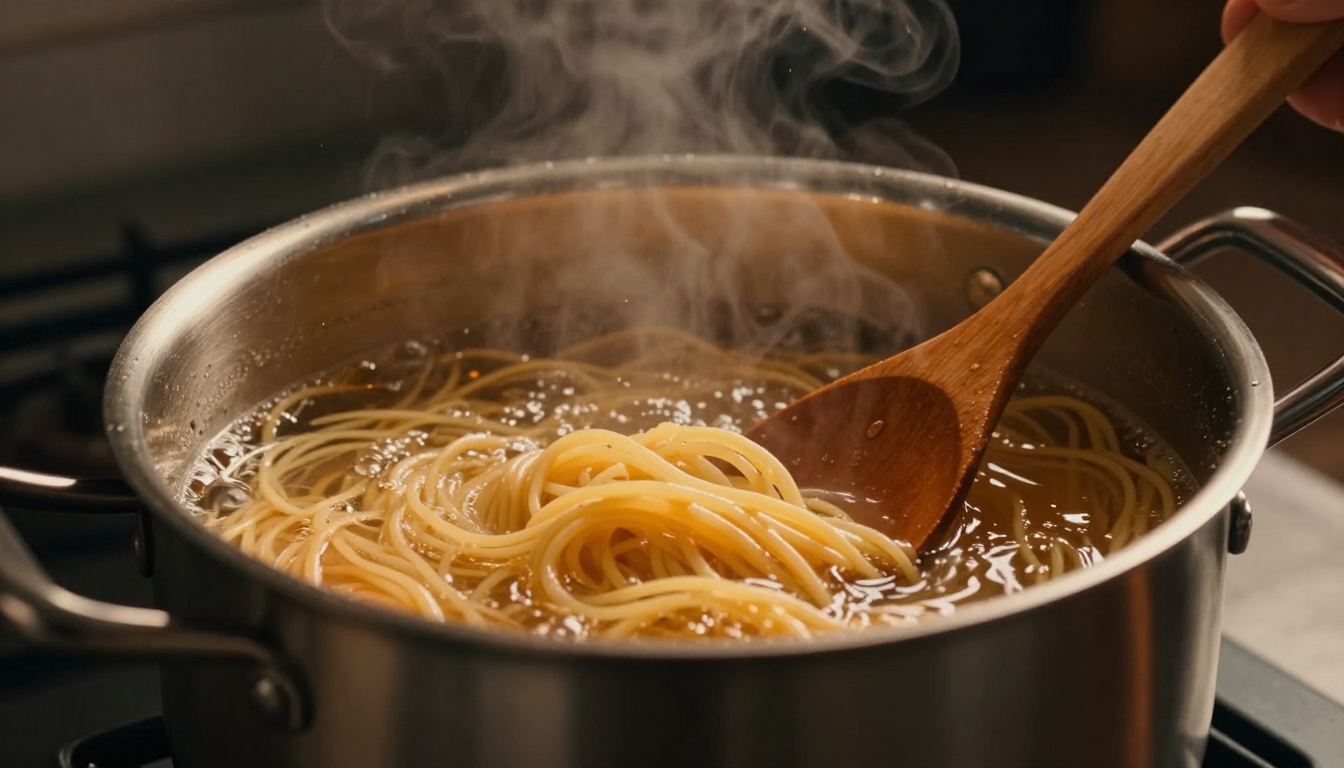
You drain the pasta, tip it into a bowl, and find one thick clump staring back at you. Few kitchen letdowns feel this annoying, especially when dinner was almost done.
Sticky pasta usually comes from the same three issues, surface starch, too little water, and not stirring soon enough. The good news is that dried pasta is easy to manage once you use a simple routine.
Start with the right setup before the pasta hits the pot
Good pasta starts before the first noodle touches water. If the pot is too small, the pasta crowds together, dumps starch into a tight space, and starts clinging almost at once.
For most dried pasta, use 4 to 6 quarts of water per 1 pound of pasta. That gives the noodles room to move. If you want a deeper look at why the ratio matters, this guide on the ideal pasta-to-water ratio explains the basics clearly.
Use a large pot and plenty of water
Think of the pot as a dance floor. A packed floor leads to elbows and tangles. A roomy one lets everyone move.
The same idea applies here. More water dilutes the starch that pasta releases as it cooks. As a result, the noodles are less likely to glue themselves to each other.
A tall stockpot works better than a small saucepan for long pasta like spaghetti or linguine. Short shapes need space too, even if they don’t hang over the edge at first.
Bring the water to a full boil before adding pasta
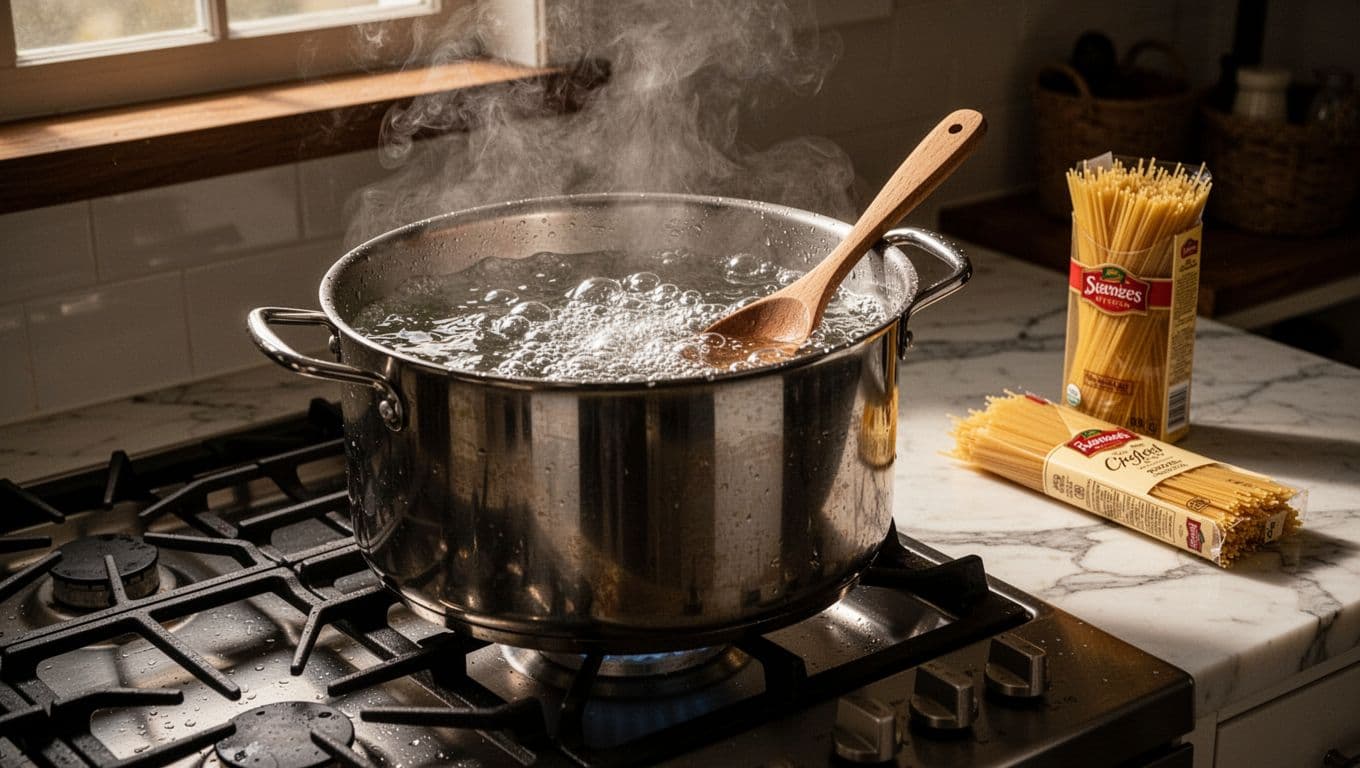
Don’t add pasta to warm or barely simmering water. Wait for a rolling boil, with strong bubbles breaking the surface across the whole pot.
That full boil matters because it keeps the pasta moving right away. If the water is weak, noodles sink, soften unevenly, and start sticking before you even reach for the spoon.
Also, keep the pot uncovered once the pasta goes in. You want steady heat and active water, not a sluggish simmer.
The cooking method that keeps pasta from clumping
Once the pasta goes in, the first minute matters most. This is when the outer starch gets loose and sticky, so a little attention here saves the whole pot.
Stir right away, then stir now and then
As soon as you add the pasta, stir it well. Separate long strands, sweep the spoon along the bottom, and keep the pasta moving for the first 30 to 60 seconds.
If you remember only one thing, remember this: stir right after the pasta hits the water.
After that, stir every couple of minutes. You don’t need to hover over the stove like a lifeguard. Still, a quick stir now and then stops noodles from settling and fusing together.
A strong boil helps too. Current advice still lines up with the basics, use enough water, keep it boiling, and stir early and often. Southern Living sums up the same idea in its tips for cooking pasta so it never sticks together.
Skip the oil in the water
A lot of cooks still pour oil into the pot, hoping it will stop sticking. It won’t.
Oil floats on top of water. That means it doesn’t fix the real problem, which is starch on the pasta surface. Worse, oily pasta can make sauce slide off later. If you want the science behind that kitchen myth, Serious Eats has a strong breakdown on why oil in pasta water doesn’t help.
So save the olive oil for the sauce or the finish. In the pot, your best tools are water, heat, and stirring.
What to do after draining so pasta stays loose
Even well-cooked pasta can turn sticky after draining. This is the part many people overlook. If noodles sit in a colander too long, steam fades, surface starch sets, and clumps form fast.
Rinse only when it fits the dish
For hot pasta that’s heading straight into sauce, don’t rinse it. That starchy coating helps sauce cling to the noodles.
For cold dishes, rinsing makes sense. Pasta salad is the classic example because cold water washes off extra starch and stops the cooking. That gives you firmer, more separate pieces.
If you want a simple rule, follow this, rinse for cold dishes, skip it for hot sauced pasta. The same advice shows up in this guide on when to rinse pasta and when not to.
Sauce it fast, or toss with a little reserved pasta water
The best move after draining is speed. Get the pasta into the sauce right away and toss it while it’s still hot.
Before you drain, save a small cup of pasta water. That starchy water helps loosen sauce and coat the noodles evenly. It’s a better fix than adding oil after the fact.
If the sauce isn’t ready yet, toss the pasta with a splash of that warm pasta water. That buys you a little time and keeps the noodles from drying into a lump.
Common pasta mistakes that lead to sticky noodles
Most sticky pasta problems come from a short list of habits. Once you know them, they’re easy to fix next time.
Too little water is a big one. A weak boil also causes trouble. Then there’s the missed first stir, which is probably the most common mistake of all. Overcooking makes everything worse because the noodles release more starch and soften until they turn gummy.
Why overcooked pasta gets gummy and harder to separate
Pasta should be tender but still have a little bite. If it cooks too long, the surface gets soft and tacky. Then the noodles cling together more easily and tear when you try to pull them apart.
Start checking for doneness a minute or two before the box says it should be done. That small change can save dinner.
A quick fix if your pasta already started sticking
If the pasta has only started to clump, don’t panic. Add it to the sauce and toss gently over low heat.
If it’s plain drained pasta, loosen it with a splash of warm reserved pasta water and separate it carefully with tongs. Cold water can help for pasta salad, but for a hot dish, warm starch water usually works better.
Sticky pasta isn’t bad luck. It’s usually a timing issue, and timing is easy to improve.
Use lots of water, wait for a full boil, stir right away, skip the oil, and don’t let drained pasta sit around. That small routine makes a big difference, even if you’re brand-new to cooking.
Next time you boil pasta, give the first minute your full attention. That’s often the difference between loose, glossy noodles and one giant clump.