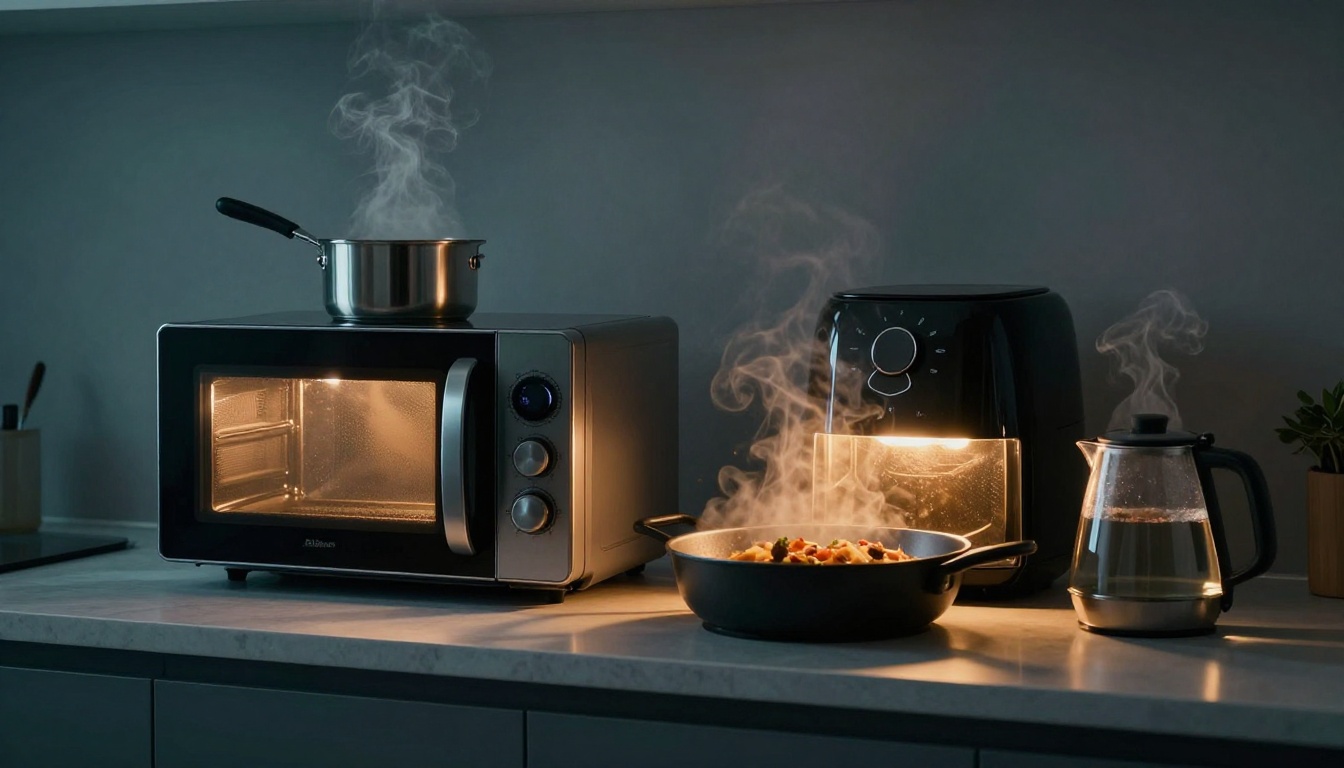
The healthiest cooking methods usually use lower heat, little or no added oil, and less smoke or charring. For everyday meals, the best options are steaming, microwaving, poaching, boiling, air frying, and careful stir-frying.
That doesn’t mean every meal has to look perfect or taste plain. The real goal is simpler: keep more nutrients, control added fat, and lower the chance of forming compounds like acrylamide and PAHs when food gets too dark, smoky, or burnt.
Once you know what makes one method healthier than another, choosing dinner gets much easier.
What makes one cooking method healthier than another?
A healthy cooking method does three things well. First, it keeps more of the food’s nutrients. Second, it doesn’t need much added fat. Third, it avoids excess smoke, scorching, and heavy charring.
That matters because cooking changes food in two ways at once. It can make food safer, softer, and easier to digest. At the same time, too much heat, water, or oil can reduce some of the benefits you started with.
Why lower heat and shorter cook times often protect nutrients
Some vitamins are fragile. Vitamin C and several B vitamins break down with long heat exposure, and they can also leak into water. So when vegetables sit in boiling water too long, some nutrition ends up in the pot instead of on your plate.
That’s why quick methods often work so well. Steaming and microwaving cook fast, use little water, and help vegetables stay bright and firm. Current nutrition guidance in 2026 still favors these gentler methods for daily cooking because they strike a smart balance between safety, flavor, and nutrient retention. For a simple breakdown, this guide to nutrient retention during cooking explains how heat and water affect food.
How smoke, char, and too much oil can make a meal less healthy
Now for the other side of the coin. When food gets very dark, smoky, or heavily browned, some less healthy compounds can form. Acrylamide often shows up in starchy foods cooked at high dry heat, like potatoes. PAHs are tied more to smoke and charring, especially with grilled meats and dripping fat.
That doesn’t mean one crispy meal is a disaster. It means risk goes up with frequent high-heat cooking, deep frying, and blackened food. A recent review on acrylamide and PAHs in food supports the same practical message: use gentler heat more often, and don’t let food cross the line from golden to burnt.
Golden brown is usually fine. Dark brown and blackened are where the bigger problems start.
The best cooking methods for healthy everyday meals
No single method wins for every food. Still, a few stand out because they’re easy, realistic, and consistently healthier for daily home cooking.
Steaming is one of the best ways to cook vegetables and fish
Steaming ranks near the top for a reason. It cooks food with moist heat, needs no oil, and creates no smoke. As a result, vegetables often keep more of their texture and nutrients than they do with longer boiling.
Broccoli, carrots, green beans, zucchini, dumplings, and fish all do well here. Fish stays tender, and vegetables keep their shape instead of turning limp. If you want the best results, pull the food as soon as it’s crisp-tender. That’s the difference between fresh and soggy.
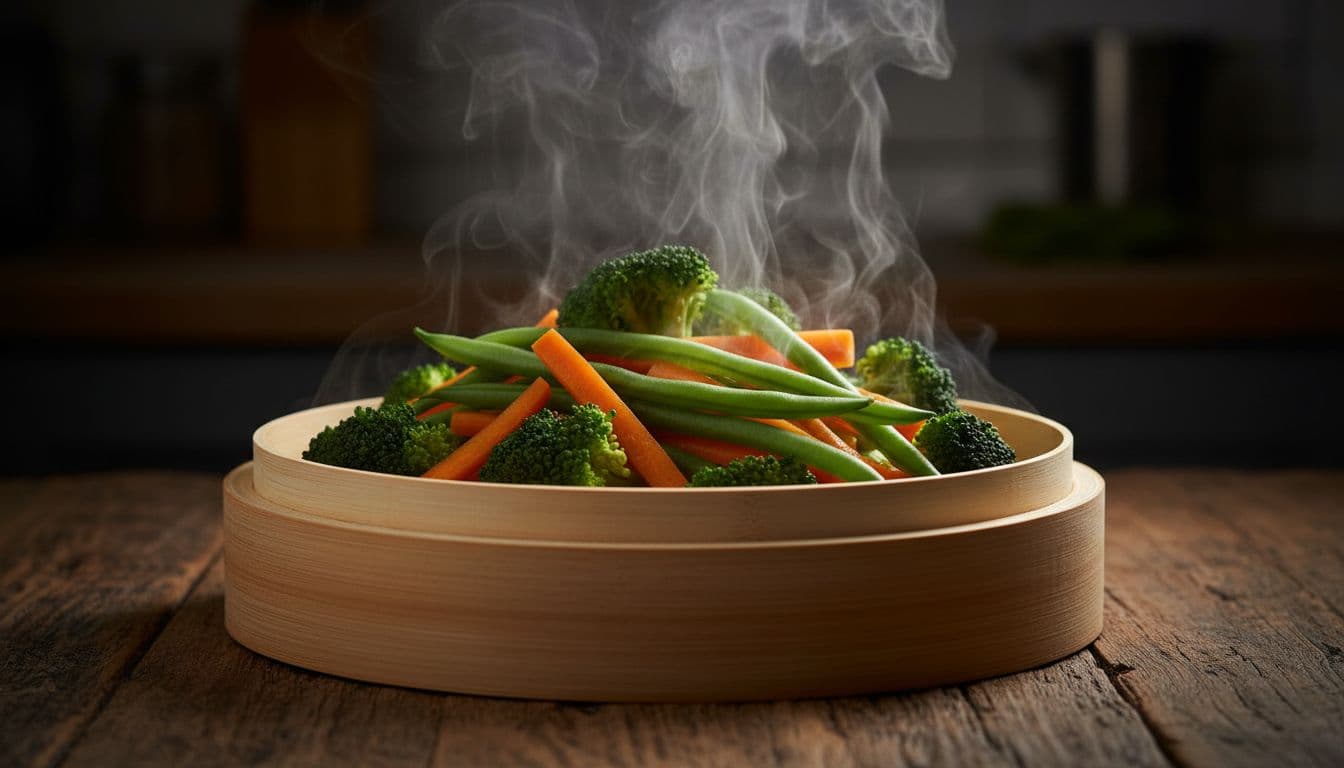
For vegetables in particular, steaming remains one of the strongest choices. This explainer on what works best for cooking vegetables lines up with that advice.
Microwaving is fast, practical, and surprisingly good for nutrient retention
Microwaving still gets an unfair bad reputation. In reality, it’s often one of the healthiest cooking methods because it cooks quickly and usually uses very little water.
That short cook time is the key. Less time under heat can mean less nutrient loss, especially for vegetables. It also works well for potatoes, reheating leftovers, frozen vegetables, and even fish.
A few simple habits improve the results. Cover food loosely so it steams, stir or rotate midway, and don’t overcook it. Think of the microwave as a fast steam chamber, not a last-resort box for leftovers.
Poaching and boiling work well when you keep the heat gentle and the time short
Poaching and boiling are cousins, but they aren’t the same. Poaching uses water or broth that’s hot but not bubbling hard. Boiling is more intense, with rolling bubbles and higher heat.
Poaching is a great fit for eggs, fish, and chicken because it’s gentle and doesn’t need added fat. Boiling still has a place too. It’s useful for potatoes, beans, grains, pasta, and soups. The catch is that some nutrients can move into the water, especially with vegetables.
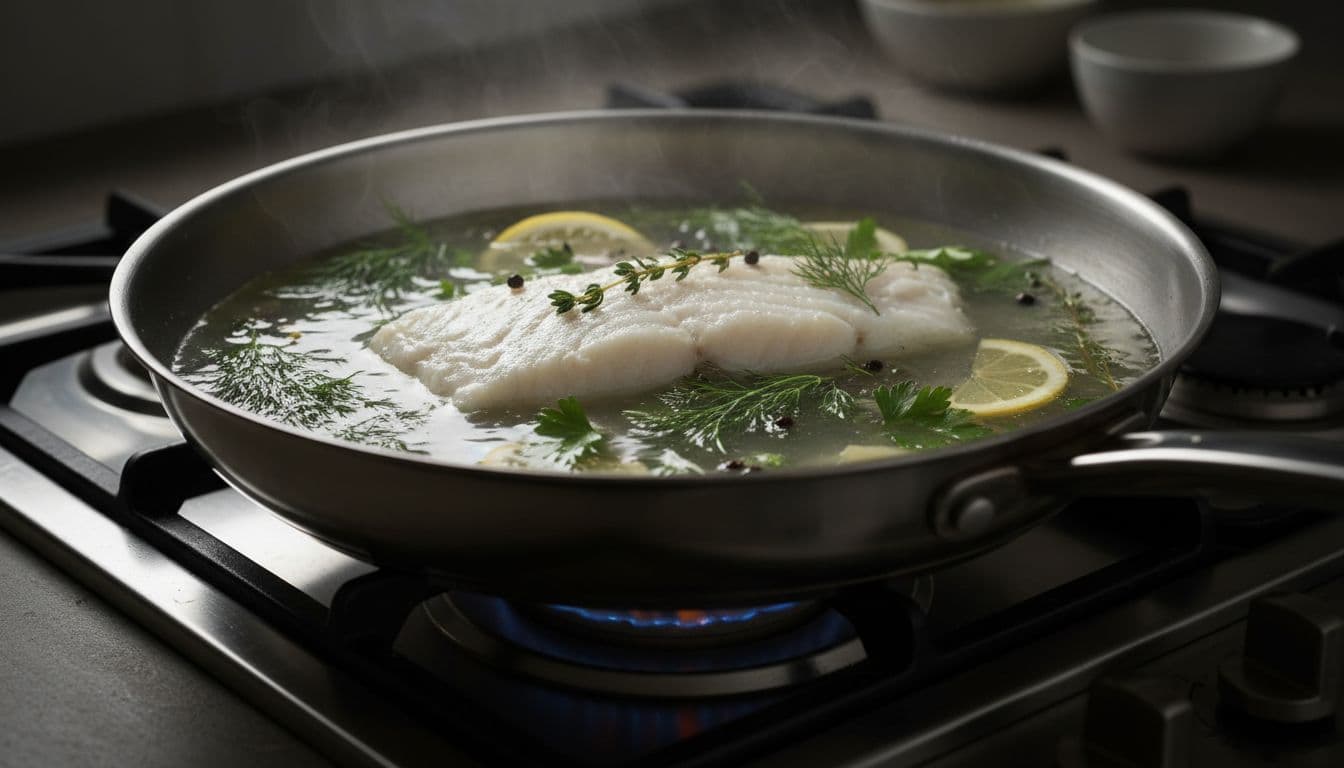
You can cut that loss by keeping the cooking time short or using the liquid in soup, sauce, or beans. This overview of methods that preserve nutrients shows why less water and less time usually help.
Healthy cooking methods that are good in moderation
These methods can still fit a healthy diet. They simply depend more on temperature, timing, and how much oil you use.
Air frying gives crisp texture with less oil than deep frying
Air frying is popular because it gives you that crisp edge without dunking food in oil. For potatoes, chicken, tofu, and many vegetables, it can cut a lot of added fat compared with deep frying.
That doesn’t make every air-fried food healthy by default. Highly processed frozen foods are still highly processed. Still, for the same ingredients, air frying is often the better everyday option. A recent comparison of air frying and deep frying makes the same point: less oil usually means fewer added calories and less fat.
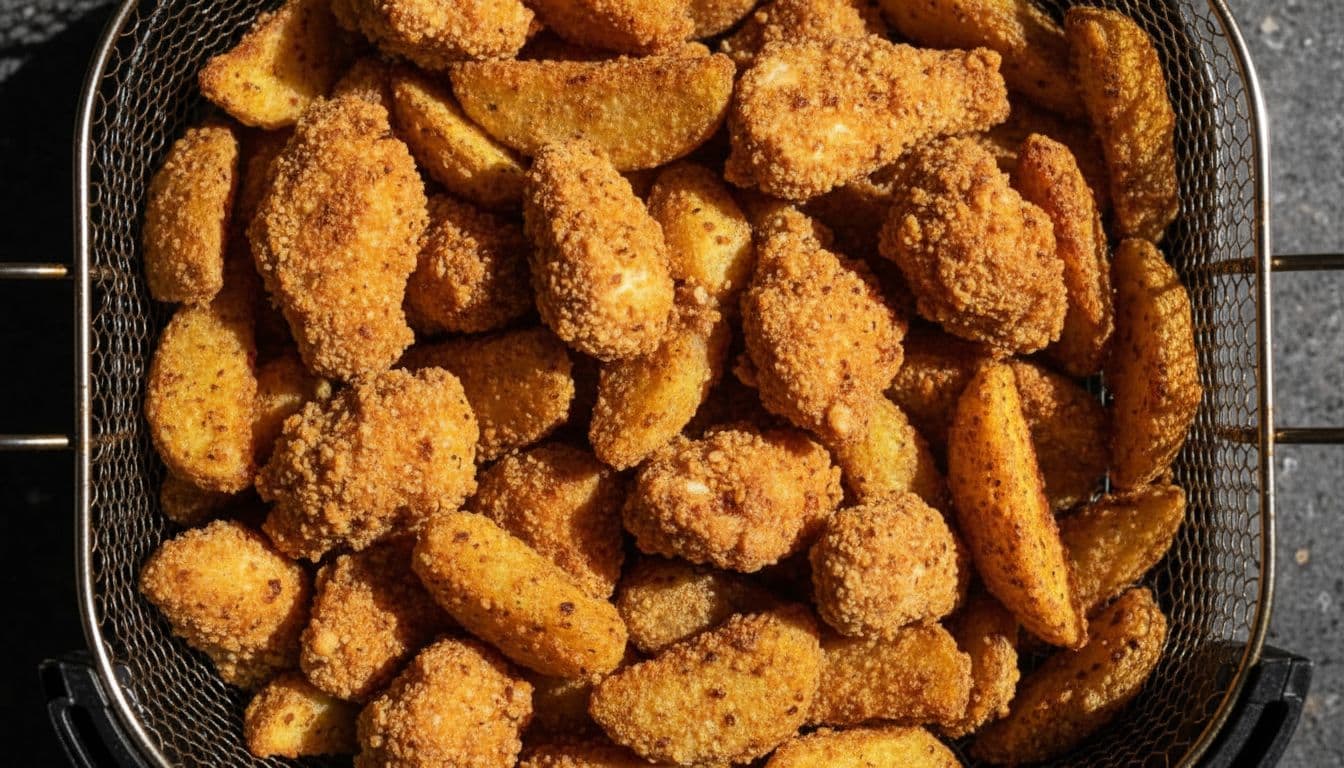
The main caution is dryness and overbrowning. Air fryers use dry heat, so don’t let food get too dark. Aim for golden, not chestnut.
Stir-frying can be healthy when you use a little oil and avoid a smoky pan
Stir-frying sits in the middle, and that’s not a bad place to be. It cooks fast, keeps vegetables colorful, and can turn a pile of produce into dinner in ten minutes.
The method stays healthier when the pan is hot but not smoking. Use a small amount of oil, add ingredients in the right order, and keep food moving. Burnt garlic, scorched sauce, and smoke are signs you’ve gone too far.
For everyday use, neutral oils with a higher smoke point work well. If you’re cooking at medium heat instead, extra-virgin olive oil is also a solid choice and still fits current 2026 nutrition advice.
Baking and roasting are fine choices when you do not overcook food
Baking and roasting are dependable, especially for chicken, fish, trays of vegetables, casseroles, and sheet-pan meals. They’re also hands-off, which matters on a busy weeknight.
Still, longer dry heat can lower some nutrients, and starchy foods can brown more deeply in the oven. Roasting at moderate temperatures, often under 400°F, helps. Pull food once it’s cooked through and lightly browned, not dark at the edges.
Cooking methods to limit if you want healthier meals most days
These methods aren’t banned. They’re simply better as occasional choices instead of your default.
Why deep frying and heavy pan frying are best saved for occasional meals
Deep frying adds a lot of fat because food absorbs oil as it cooks. Heavy pan frying can do the same, especially when oil pools in the pan or the heat stays too high.
Repeatedly heated oil is another issue. Over time, very hot oil breaks down and creates more unwanted byproducts. Even if you start with a better oil, deep-fried food still isn’t a top everyday choice because of the fat load and high heat.
Why grilling and high-heat charring should not be your main weekly method
Grilling has benefits. It can cook meat without much added oil, and it adds flavor fast. The problem is the smoke and char, especially when fat drips onto flames and sends smoke back onto the food.
You don’t need to quit grilling. Instead, lower the risk by trimming visible fat, marinating meat, using lower heat, flipping often, and cutting off blackened bits. A 2025 review on PAHs and high-temperature meat cooking backs up those simple steps.
Flavor doesn’t need char. Herbs, spice rubs, citrus, and marinades can do a lot of the work.
How to choose the healthiest cooking method for the food on your plate
The easiest way to decide is to match the method to the food. This quick table helps.
| Food type | Best everyday methods | Why it works |
|---|---|---|
| Vegetables | Steaming, microwaving, quick stir-frying | Fast cooking, less nutrient loss |
| Fish | Steaming, poaching, baking | Gentle heat keeps it tender |
| Chicken | Poaching, baking, stir-frying | Good texture with less added fat |
| Beans and grains | Boiling, simmering | Needed for texture and digestibility |
| Potatoes | Microwaving, boiling, air frying | Flexible, less oil than frying |
| Frozen foods | Air frying, baking | Better crisp texture with less oil |
Best picks for vegetables, proteins, grains, and frozen foods
Vegetables usually do best with steaming or microwaving. Fish and chicken respond well to poaching or baking. Beans, lentils, rice, oats, and pasta need boiling or simmering because water is part of the job. Frozen foods are where air frying or baking shines, especially when you want a crisp finish.
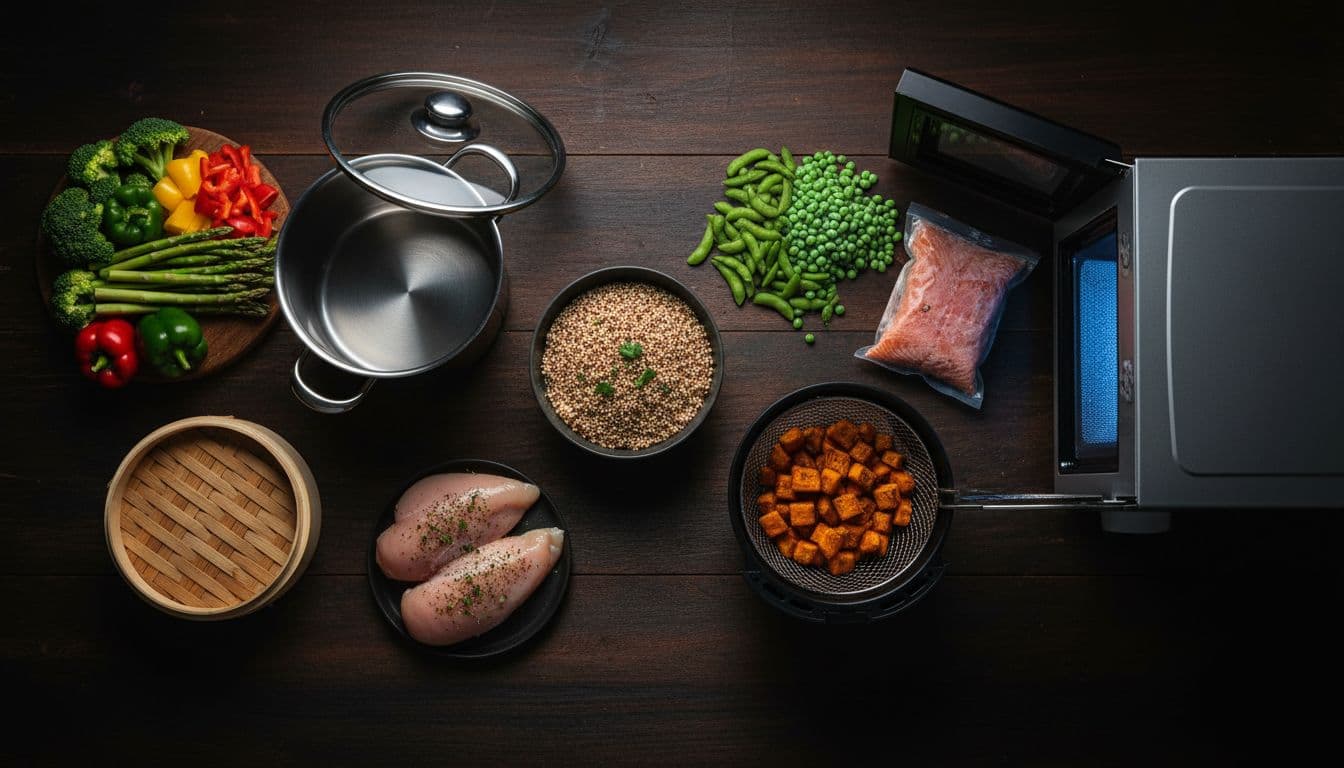
The pattern is simple. Use moist, gentle methods for delicate foods, and use dry heat carefully when you want browning or crunch.
Simple rules that make almost any cooking method healthier
A few habits matter more than fancy equipment. Use less oil. Keep heat as low as the food allows. Don’t overbrown starchy foods. Season with herbs, spices, garlic, citrus, and vinegar instead of relying on extra fat.
Also, mix your methods through the week. Steam vegetables one night, poach fish the next, then bake chicken or air-fry potatoes later on. Healthy cooking isn’t about one perfect technique. It’s about repeating better choices often enough that they become normal.
Steaming, microwaving, poaching, and other gentle methods are usually the healthiest everyday options because they keep more nutrients, need little added fat, and avoid heavy smoke or charring. That’s the steady answer, even as food trends change.
You don’t need to cook like a lab technician to eat well. Focus on consistency, not perfection, and pick the method that fits the food, your schedule, and your health goals.
Tonight’s meal is a good place to start.