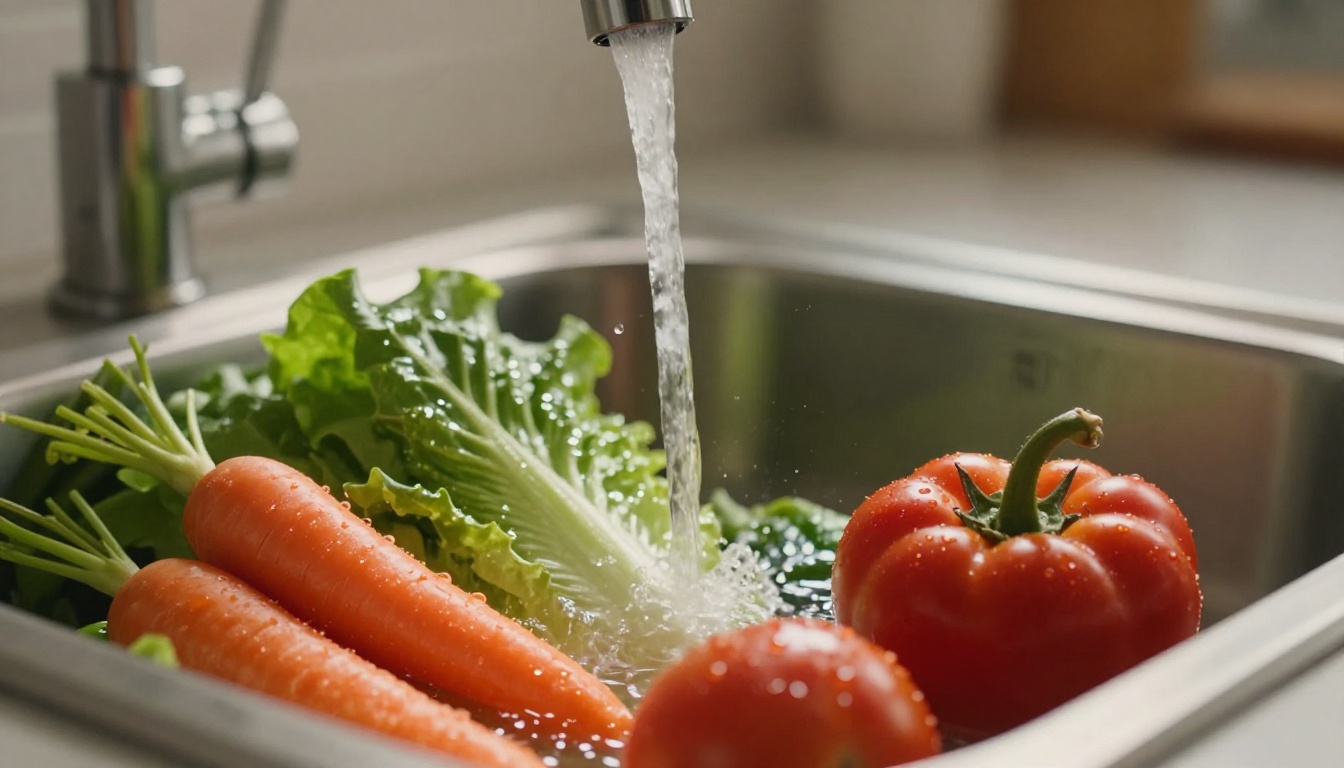
A better salad starts before the first chop. Washing vegetables the right way improves taste and texture, and it also lowers the risk of foodborne illness.
Still, safe prep is more than a quick splash at the sink. Think of it as a simple kitchen flow, choose, wash, prep, then store. For most home cooks, plain running water is the right tool, not soap and not produce wash.
Start with a clean setup before you touch the vegetables
Safe vegetable prep begins before the faucet turns on. If your hands, knife, or cutting board are dirty, germs can move to the food in seconds.
Wash your hands, tools, and counters first
First, wash your hands with soap and warm water for 20 seconds. Do this before prep, and again after touching raw meat, eggs, pets, or the trash.
Next, clean knives, counters, colanders, and cutting boards with hot, soapy water. A clean sink matters too, because vegetables often touch the basin or drain area while you rinse them. The FDA’s produce cleaning tips line up with this same order, clean hands, clean tools, then clean produce.
Keep vegetables away from raw meat and seafood
Cross contamination sounds technical, but the idea is simple. Germs from raw meat or seafood can spread to vegetables through bags, fridge shelves, plates, or prep surfaces.
So, keep produce in separate shopping bags when you can. At home, store raw meat below ready-to-eat foods so drips don’t fall onto peppers, lettuce, or herbs. Use one cutting board for produce and another for raw meat. Also, don’t wash raw meat in the sink, because splashing water can spread germs around the kitchen.
Clean vegetables can still become unsafe if they touch a dirty board, knife, or sink.
Know which vegetables need rinsing, scrubbing, or no extra washing
Not all vegetables feel the same in your hands, but the starting rule is simple. Rinse all whole vegetables under cool running water, even if you’ll peel them or cook them later.
That matters because dirt and germs on the outside can move inward when your knife cuts through the skin. The USDA guide to washing fresh produce also backs this up. If you’re working with lettuce or cabbage, remove the outer leaves first. Then cut away bruised or damaged spots before the rest of the prep.
This quick chart makes the choices easier:
| Type of vegetable | What to do |
|---|---|
| Whole, soft vegetables | Rinse under cool running water and rub gently by hand |
| Firm vegetables | Rinse and scrub with a clean produce brush |
| Bagged greens labeled ready-to-eat or prewashed | No extra washing needed |
| Bruised or damaged produce | Trim bad spots, discard rotten pieces |
The big takeaway is easy: most whole vegetables need a rinse, firm ones often need a scrub, and prewashed, ready-to-eat greens can go straight into the bowl.
Rinse all whole vegetables under running water
Running water is the main step, not soaking. Hold the vegetables under cool water and gently rub the surface with your hands, especially for items like tomatoes, peppers, or zucchini.
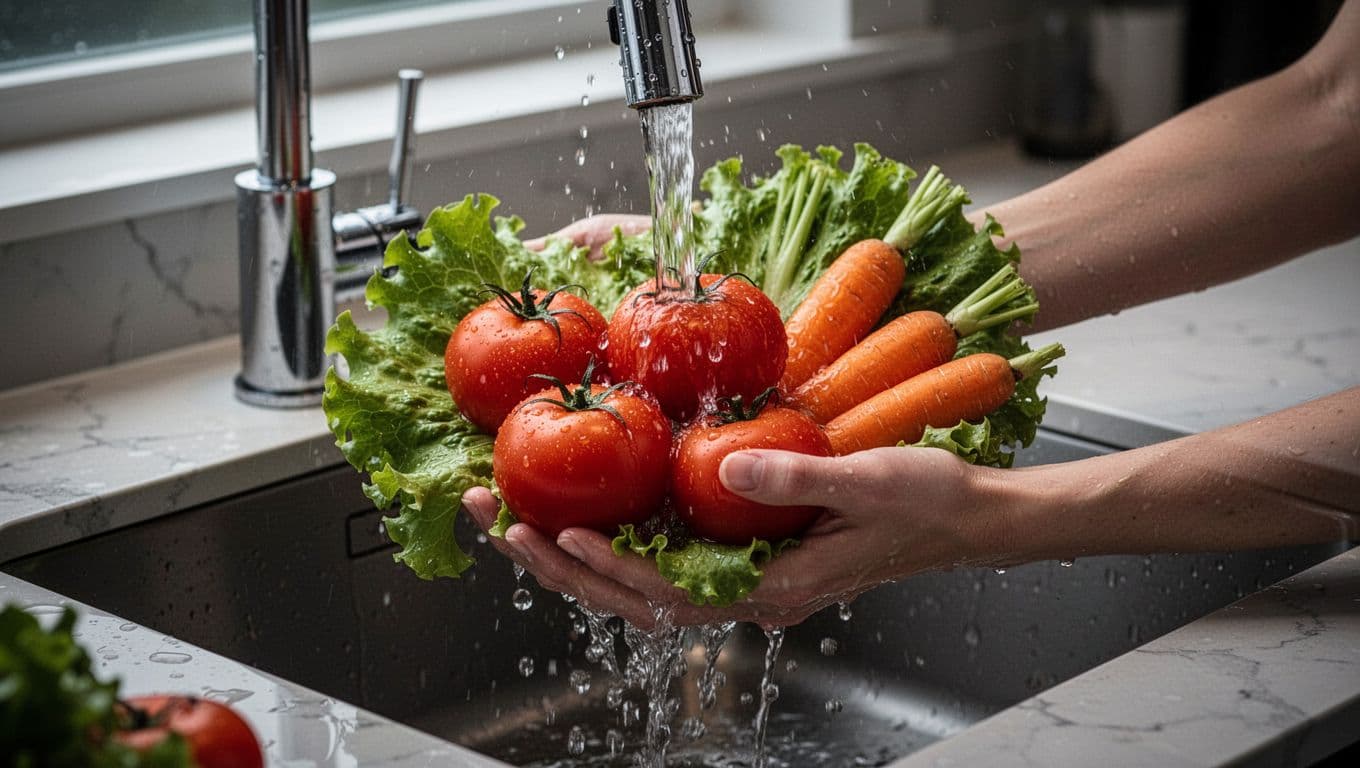
This works for vegetables from the store, the farmers market, or your own garden. Even if you plan to peel carrots or cucumbers, wash first. Otherwise, the knife can drag what’s on the outside into the part you eat.
Scrub firm vegetables and trim damaged spots
Firm vegetables need a little more help. Potatoes, carrots, cucumbers, and similar produce often hold dirt in tiny surface cracks, so a clean produce brush helps loosen it.
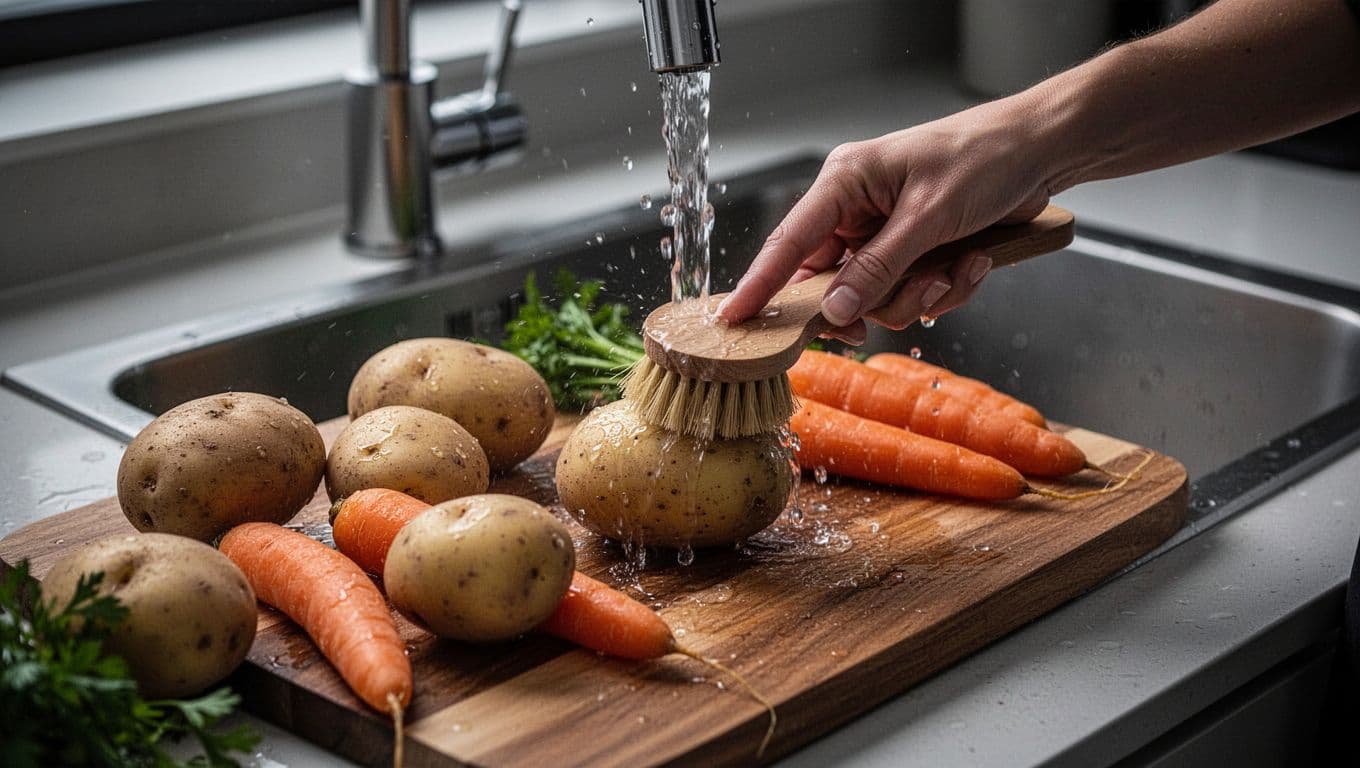
After that, inspect for bruises, soft areas, or mold. Cut away small damaged spots, but toss anything rotten. Think of it like trimming a frayed edge before it spreads.
Wash vegetables the safe way, without soap or special sprays
This is where many people overdo it. Soap, detergent, bleach, and store-bought produce washes are not recommended for vegetables at home.
Why plain water works best for most vegetables
Plain water does the job for everyday washing. Soap can leave residue, and porous vegetables may absorb some of it. That’s a bad trade, cleaner-looking food that may upset your stomach.
Skip soap and special produce sprays. For home kitchens, cool running water is the safer choice.
If you’ve ever thought, “Wouldn’t soap clean better?” it sounds logical, but food isn’t a plate. The goal is to rinse away dirt and lower germ load without adding a cleaner that doesn’t belong on something you’ll eat.
Drying matters more than many people think
After rinsing, dry vegetables with a clean cloth or paper towel. This can remove extra dirt and some germs left behind after washing.
Drying also helps with prep. Wet lettuce waters down dressing, and damp peppers can slide under the knife. So, if you’re chopping right away, a quick dry makes the food safer and easier to handle.
Cut, peel, and store vegetables so they stay safe and fresh
Once vegetables are washed, keep the order straight. Wash first, then peel, then chop. If you peel first, the knife or peeler can pull dirt from the skin into the flesh.
Peel and chop in the right order
This step is easy to forget with onions, carrots, cucumbers, and potatoes. Yet the outside surface is where soil and germs tend to sit. The FDA’s advice on selecting and serving produce safely points to the same habit, clean the outside before cutting or peeling so you don’t carry contamination inside.
If a vegetable needs cooking, that adds another layer of safety. Still, washing comes first.
Refrigerate cut vegetables promptly
Peeled or cut vegetables should go into the fridge within 2 hours. If your kitchen is hot, move faster. Keep prepped vegetables at 40°F or below.
That applies to cut carrots, chopped peppers, celery sticks, and salad fixings. A simple kitchen rhythm helps:
- Wash first: Rinse whole vegetables under cool running water.
- Dry next: Use a clean towel or paper towel.
- Prep after that: Peel and chop on clean surfaces.
- Chill soon: Refrigerate cut vegetables promptly.
Small habits do most of the work here. Clean hands and tools, rinse under running water, scrub firm vegetables, skip soap, dry well, then cut and store safely.
The good news is that this doesn’t take much extra time. Build the routine once, and every meal gets safer, fresher, and easier from there.