A messy kitchen steals time in small ways. You hunt for a lid, move three bottles to reach the oil, and wash the same knife twice because the drawer is chaos.
The fix isn’t a perfect photo-ready setup. Kitchen organization works best when it fits how you cook every day, whether you have a tight apartment galley or a big family kitchen. In 2026, the smartest kitchens use clear zones, less clutter, easy reach, and storage that helps dinner happen faster.
Start by clearing out what gets in your way
Organizing works better after a reset. If you skip this part, you’ll spend money on bins that hold stuff you don’t even need.
Pull everything out in small sections, one drawer, one cabinet, one shelf. Then remove duplicates, expired food, broken tools, and gadgets you forgot you owned. Keep what supports your real routine, not the version of you that bakes wedding cakes twice a month.
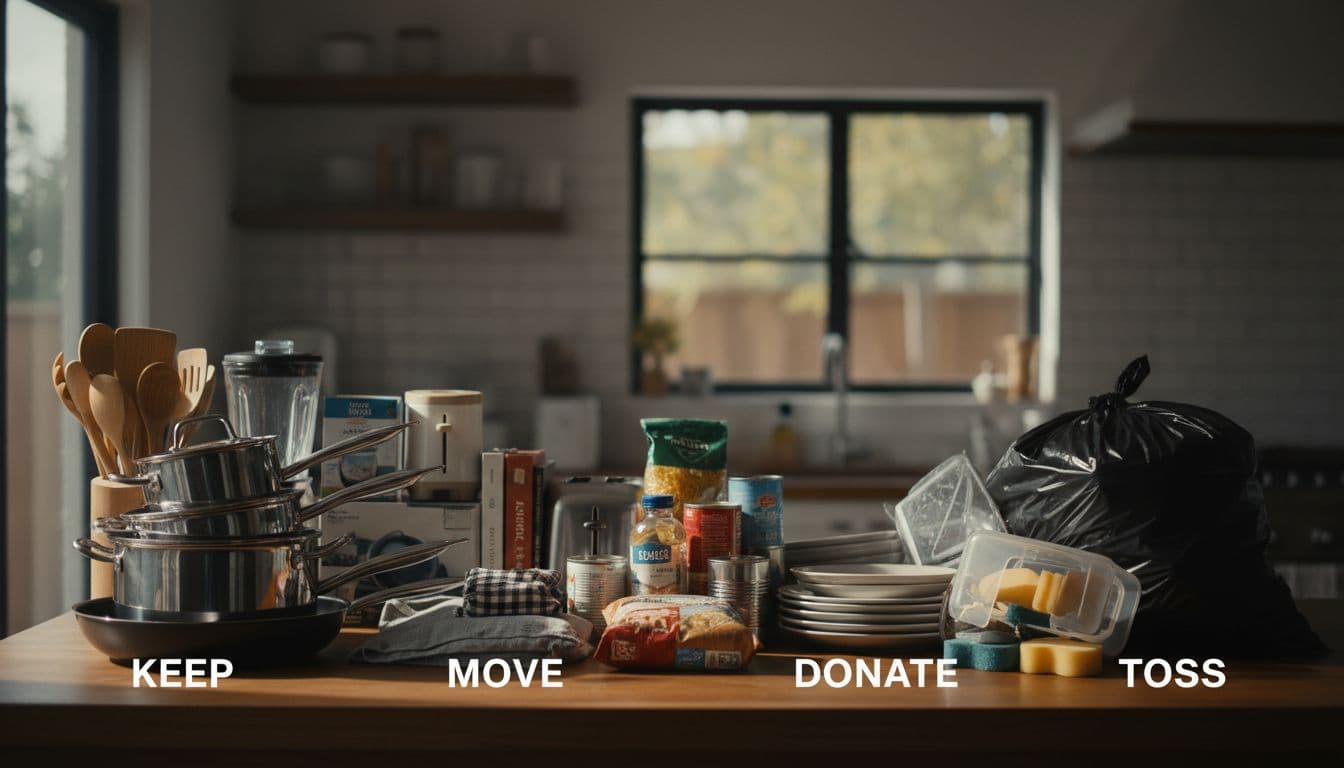
Sort everything into keep, move, donate, and toss
This method keeps decisions simple. Pantry food gets checked for dates. Cookware gets judged by use, not guilt. Lids without matches, warped pans, cracked containers, and dull peelers usually need to go.
Put special-occasion pieces somewhere less prime. If you only use the roasting pan at Thanksgiving, it doesn’t need the best lower cabinet. A good declutter checklist for kitchens can help if you tend to stall out halfway through.
Notice what you use every day before choosing storage spots
Now pause and watch your habits. Do you make coffee first thing? Pack lunches at one counter? Cook quick pasta dinners four nights a week? Those patterns matter more than matching containers.
Think of your kitchen like a map, not a closet. The goal is to reduce steps, not simply hide stuff.
Create kitchen zones that match how you cook
The old kitchen triangle still has value, but zones often work better now, especially when two people cook at once. A zone groups the tools and supplies for one task in one area, so your kitchen feels less like an obstacle course.
That’s why zone-based layouts keep showing up in current organizing advice. If you want a visual example, this guide to kitchen zone mapping shows how grouping by task cuts down on extra walking.
Build a prep zone with knives, boards, bowls, and oils close together
Your prep zone should hold the items you reach for before heat starts. Keep cutting boards, chef’s knives, mixing bowls, measuring cups, salt, pepper, and cooking oils near the main counter you use for chopping.
If possible, place this zone near the fridge. That way, produce comes out, gets washed, chopped, and moved to the stove without crossing the room three times.
Keep the cooking zone stocked with the tools you reach for at the stove
Store spatulas, wooden spoons, tongs, pot holders, and your most-used spices close to the range. Pans and lids should live nearby too. Vertical dividers work well for pans, baking sheets, and cutting boards because you can grab one without lifting five others first.
Current US kitchen trends back this up. In 2026, homeowners are leaning hard toward hidden, task-based storage. Pull-out bins are showing up in 64% of kitchen updates, and 55% include drawers for trays and cookie sheets. That says a lot: people want storage that works during a rushed Tuesday dinner, not only on reveal day.
Make the cleanup zone easy to reset after every meal
Cleanup gets easier when the sink area has its own support system. Keep dish soap, sponges, dishwasher pods, hand towels, and trash bags close by. Food storage containers should also live near the dishwasher or sink, not across the kitchen.
Trash placement matters more than most people think. When the trash and dishwasher sit near the sink, cleanup becomes one short loop instead of six annoying trips.
Put everyday items where they are easiest to grab
The best spot for any item depends on three things: how often you use it, how heavy it is, and where you use it. That’s the whole logic.
Store the most-used tools between waist and eye level
This is prime kitchen real estate. Daily plates, bowls, glasses, lunch containers, spices, and go-to pantry items belong here because they need the least effort to reach.
Heavy pots, Dutch ovens, and small appliances usually belong in lower drawers or deep base cabinets. High shelves should hold light, rare-use pieces, not the slow cooker you need every Sunday.
Use drawers, risers, and dividers so you can see everything fast
Visibility changes everything. Shelf risers help stack dishes without burying them. Drawer organizers stop utensils from turning into a junk pile. Lazy Susans make oils and sauces easier to spin and grab. Clear bins help pantry foods stay grouped by type.
That shift toward better visibility shows up in design advice too. These kitchen organization ideas from Architectural Digest highlight why risers, adjusted shelves, and dedicated zones make daily use easier, not simply prettier.
If you can’t see it, you’ll buy it again or forget to use it.
Organize cabinets, drawers, and counters for quick meals
Every drawer and cabinet should have one clear job. When a space tries to hold five categories, it turns messy fast.
Give every drawer and cabinet one clear job
A baking cabinet, breakfast shelf, lunch-packing drawer, or snack zone for kids makes decisions easier. You stop asking where something goes because the answer is obvious.
This approach also works well with newer storage choices. Pull-out shelves, deep island drawers, and narrow tray dividers help each area stay focused. Islands are doing more work in 2026 too, with over half of homeowners placing appliances inside them to free up other surfaces. At the same time, open shelving is losing favor because it collects dust and looks cluttered fast. Closed storage wins because it hides the visual noise.
Keep counters clear except for what supports your routine
Counters should help you cook, not store overflow. Leave out the coffee maker, utensil crock, or cutting board only if they truly earn the space.
If appliances pile up, create one appliance station or beverage area. That keeps the rest of the counter open for prep, which is where most kitchen stress starts.
Keep your kitchen organized without a big weekly reset
A good system shouldn’t need a heroic cleanup every Saturday. It should hold up with small habits.
Do a five-minute daily reset after cooking
Put tools back in their zones. Wipe the counters. Clear the sink. Put leftovers away before they become tomorrow’s clutter. Five minutes does more than one long weekend reset because it stops the mess early.
Refresh your pantry, fridge, and drawers once a week
Once a week, toss expired food, refill staples, and fix anything that drifted out of place. Wipe pull-out drawers and check containers for missing lids.
Simple systems are easier to keep. Easy-clean finishes, clear bins, and labeled groups cut the friction, so you stick with the setup.
A well-organized kitchen saves time because it cuts tiny delays all day long. When each item has a useful home, cooking feels lighter and cleanup stops dragging behind you.
Start with less stuff, then build zones, place items by use, and protect the system with short resets. You don’t need a remodel to make cooking easier.
Pick one drawer or one cabinet today. Small changes are often the ones that finally last.